I mentioned previously that my mother’s side (the Hammers) cheekily calls their family reunions “Oktoberfests.” In reality, Oktoberfest is an annual German Volksfest that takes place in Munich.
“Volksfest” (German for “people’s festival”) is the generic name for events that take place all throughout Germany. They usually combine a beer and/or wine festival with a traveling funfair. Typically, breweries will set up beer tents (“Festzelte”) and beer gardens, outdoor areas where one can order traditional food and try the beer specially brewed for the season (“Festbier”). A large beer tent will have hundreds of wooden benches with a seating capacity in the thousands and offer live music, being a favorite place for patrons to spend the evening. Especially in Bavaria, it is common during the Volksfest for people to wear the “Tracht” or traditional folk costumes such as Lederhosen for men, and the Dirndl for women. If you imagine the stereotypical image of a “German beer girl”, you’re probably picturing a woman with pigtails wearing a Dirndl.
Munich’s Oktoberfest lasts 2 weeks and ends on the first Sunday in October. It was first held on October 12, 1810, in celebration of the marriage of the crown prince of Bavaria. Nowadays, the event draws many tourists, and total beer consumption during Oktoberfest is upwards of 2 million gallons.
It’s been a while since I attended a Hammer family Oktoberfest, but it has quaint customs of its own, and successfully attracts family members from far-flung regions of the continent. The reunions are hosted at different households on a rotating basis. The goal is for everyone to relax outdoors in good weather with a few beers, catch up, and have fun. (And of course, take a marathon of family photos in different combinations. I do remember the presence of feathered “alpine hats,” and some attendees in Lederhosen for a lark. The evening is not complete without group karaoke to a “traditional” song list which includes “Summer Nights”, “Sweet Caroline,” and others.
In my experience, lots of other Midwesterners are really into the idea of Oktoberfest. I enjoy local Nebraska estate sales, and if you go to enough of them, one artifact from southern Germany that you’ll notice people like to collect is the “beer stein.” The stein is an ornamental beer mug based on traditional Bavarian stoneware, oftentimes with a lid, presumably for protecting insects from swarming the beer when outdoors. Steins have become popular as collectibles — with most bearing designs commemorating an event or location. Most people who collect them never drink out of them, as far as I know.
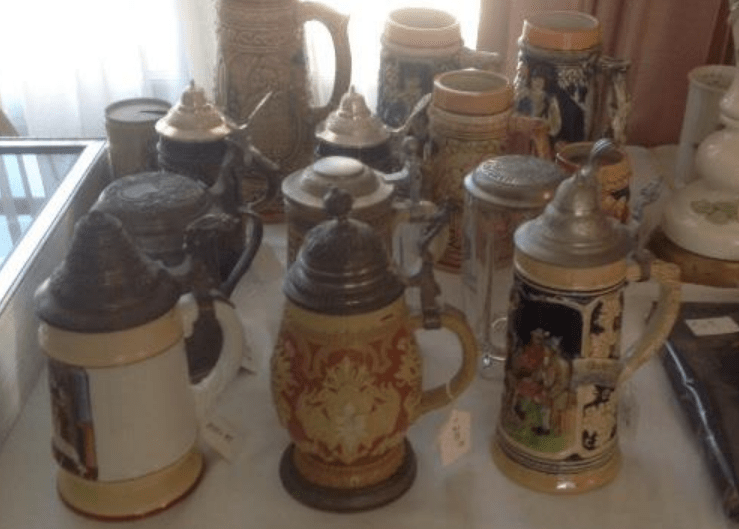
This image was taken from an Omaha estate sale website. Pretty typical stein collection at some random middle-class home.

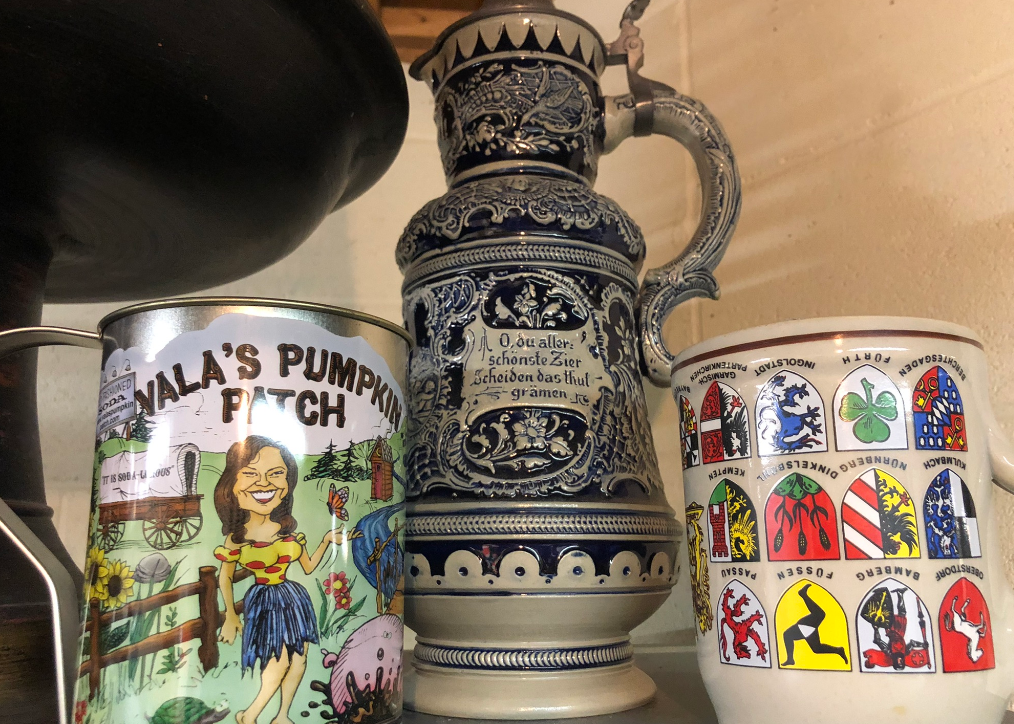
Given all this, I need to be careful in Munich, because I may just be tempted to buy a stein or Dirndl and have it shipped back home.
 Eva Adventures
One response to “Prologue III: Oktoberfest!”
Technology: When we bought that stein some 10 years ago, it’s “low German” was not translatable by the internet. Fortunately Sharon’s Uncle Franz was able to crack the code.
LikeLike