It was a long trip through increasingly desolate train stations to the lovely Rotenburg ob der Tauber.
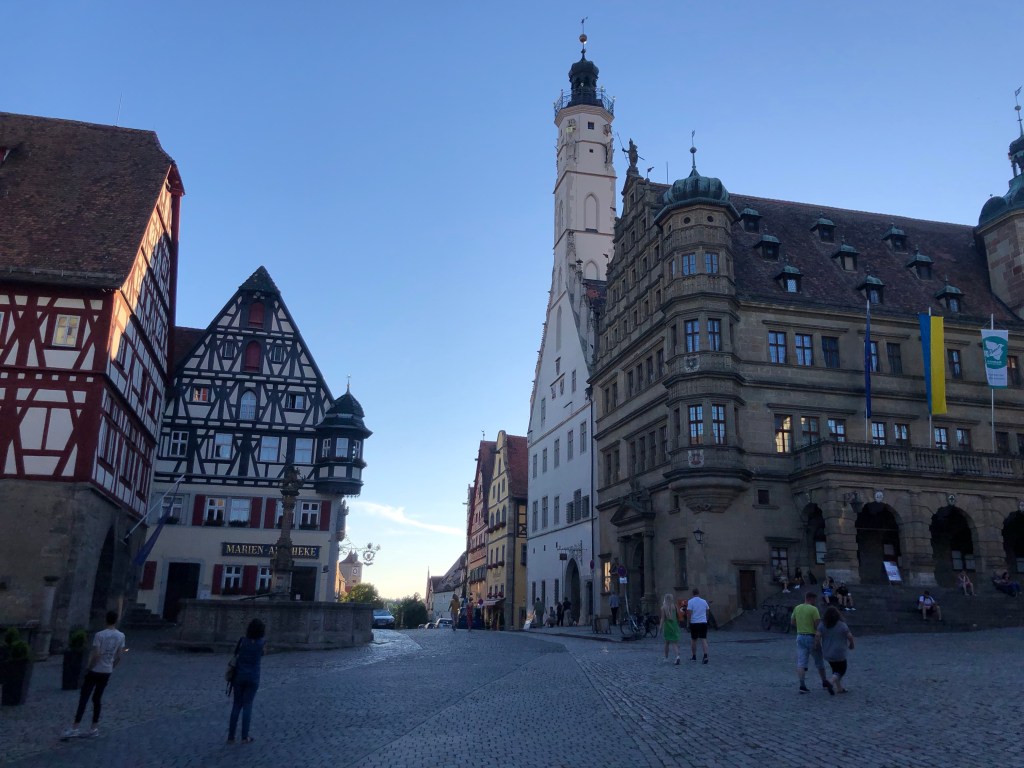
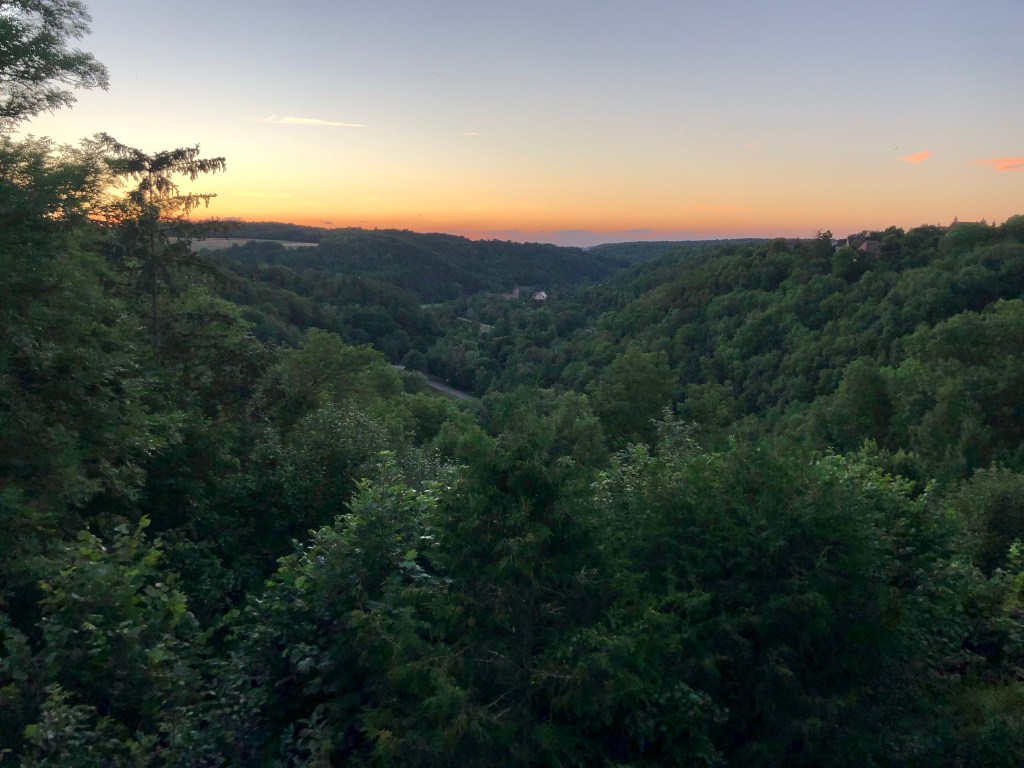
This Bavarian town in south-central Germany lies above the deep valley of the Tauber River. Bavaria is the more “rural and folksy” area of Germany, and there are less English speakers.
And, wow!! This place is a gorgeously preserved medieval city. I feel like I fled the big scary city straight into a fantasy, fairy-tale world.
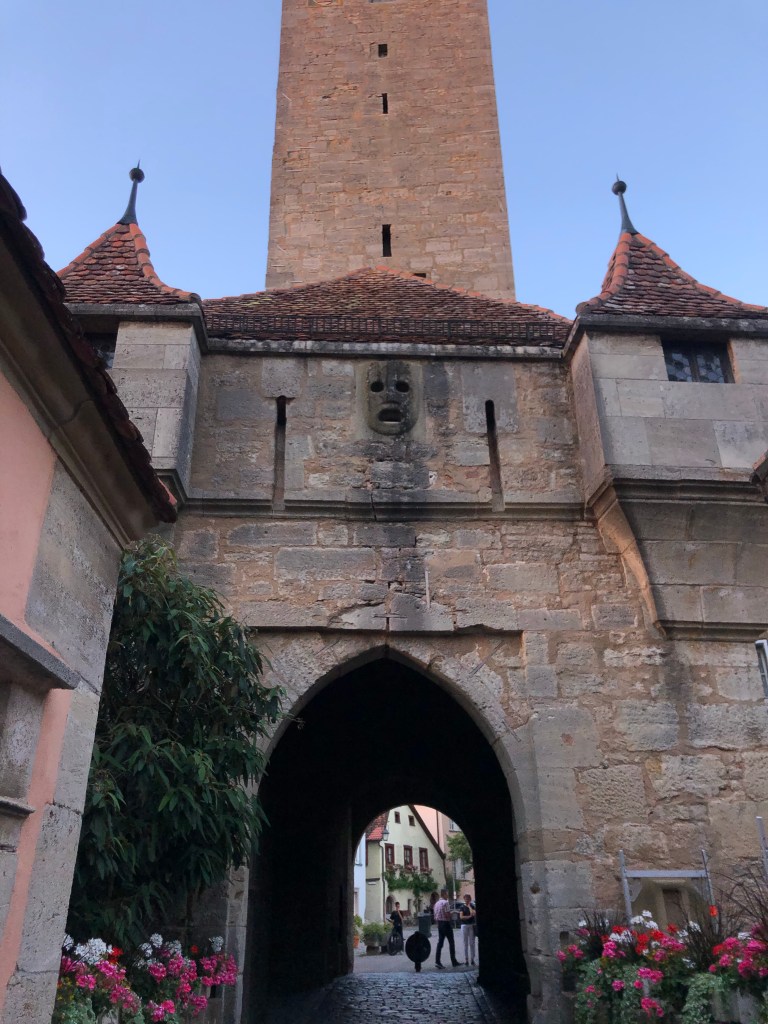
The whole town is a tourist attraction, and very visitor-friendly — with great customer service and information signs in German, English and Japanese. However, I appreciate that, while very touristy, it’s not artificial. This place is a real piece of preserved history.
The city attained its zenith under burgomaster (“mayor”) Heinrich Toppler (1373–1408) and declined after the Thirty Years’ War, during which it was besieged and captured (1631) by Catholic League forces under Johann Tserclaes, Graf (“count”) von Tilly. At that time the city was supposedly spared when a citizen accepted a dare from the enemy to drink more than three quarts of wine in one gulp; the tankard is featured in the collection of the Imperial City Museum. The event is commemorated every Whitsuntide by the performance of a play, Der Meistertrunk (“The Master Gulp”).
For more context, the Thirty Years’ War took place largely within the Holy Roman Empire from 1618 to 1648. It caused an estimated 4.5 to 8 million deaths, while some areas of Germany experienced population declines of over 50%. Although German religious schism (initiated by the Reformation, and Protestantism spreading beyond its boundaries) was a significant factor in starting the war, scholars now generally agree its scope and extent was driven by the contest for European dominance between Habsburgs in Austria and Spain, and the French House of Bourbon.
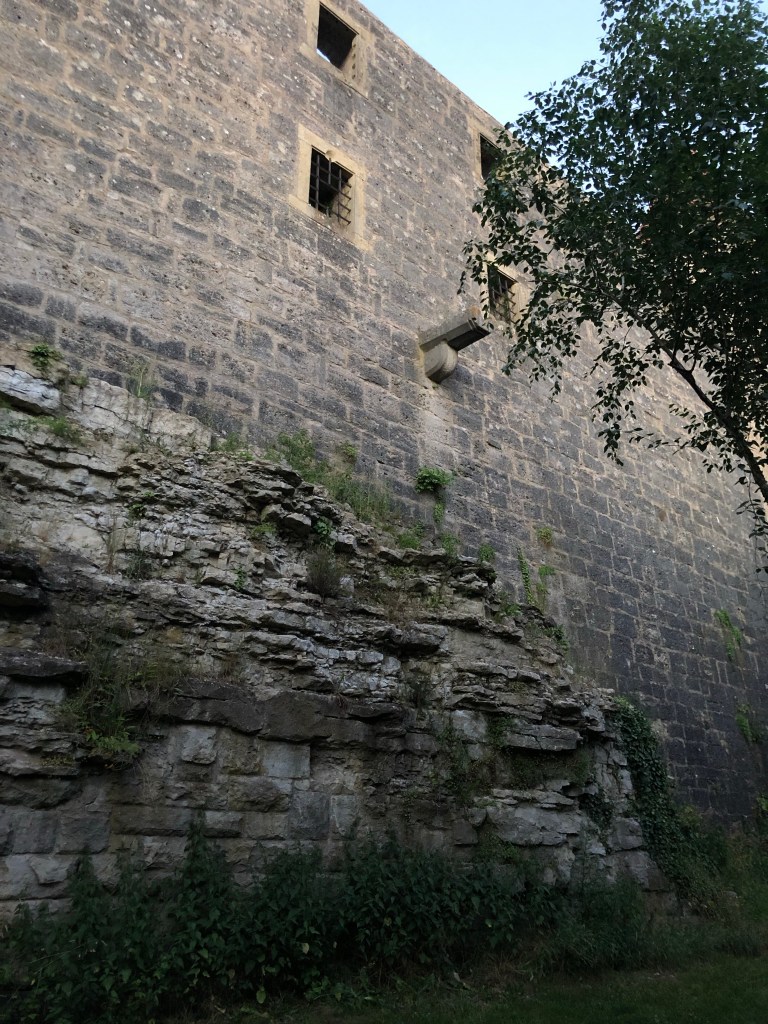
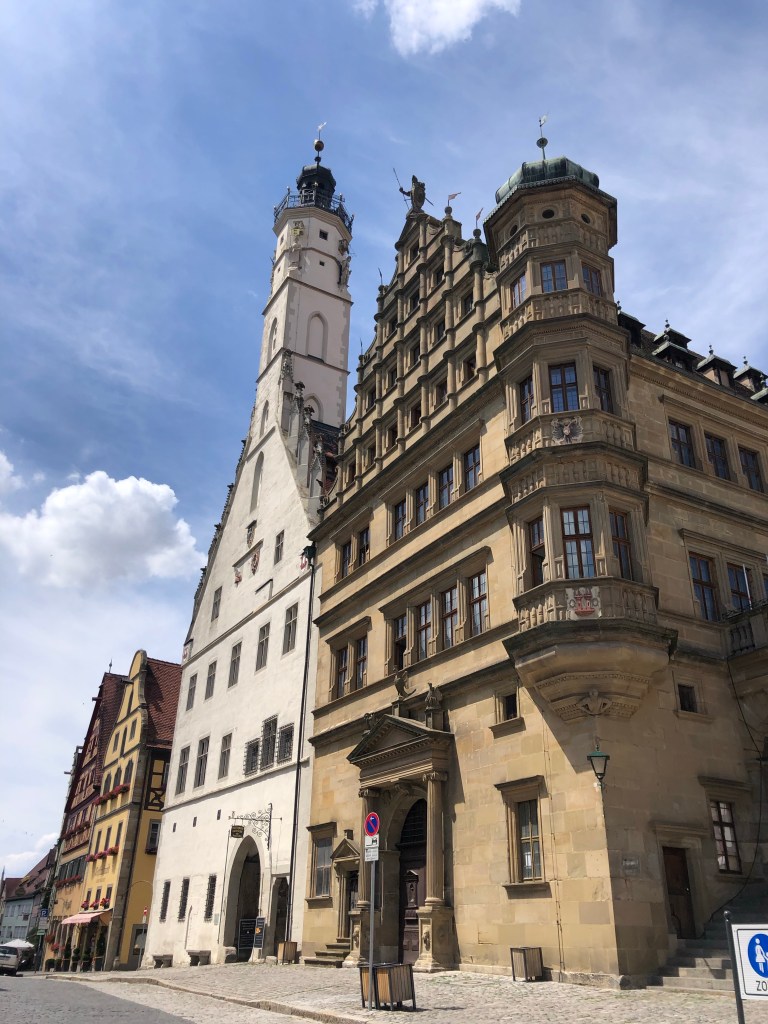
The city is encircled by many-towered walls and is one of the best-preserved medieval cities in Germany. Landmarks include the Gothic and Renaissance city hall with a Baroque arcade and the church of St. Jacob (1373–1528) with a wooden altar by Tilman Riemenschneider (a master sculptor of the Gothic period).
Last night I did some exploring. Though most shops were already closed, I was happily wandering the streets and walls until 11 PM. Temperatures were cool and many of the other tourists were gone. The only open eatery was an Italian restaurant, where I enjoyed pasta and regionally made sparkling apple juice (it tasted like apple cider).

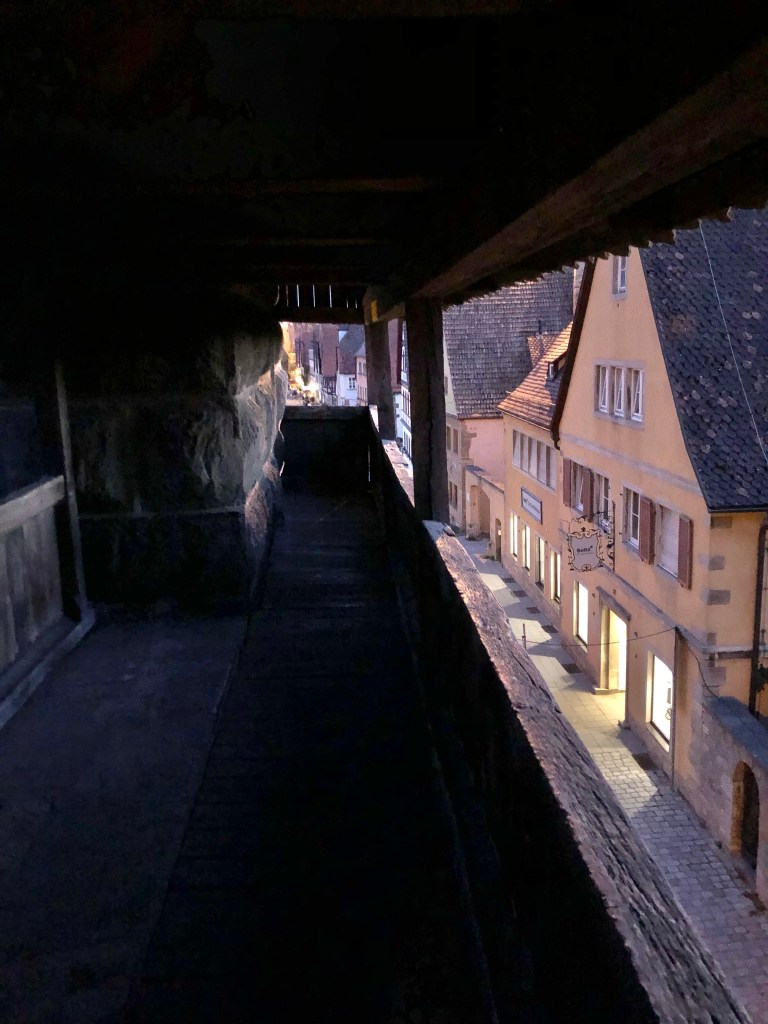


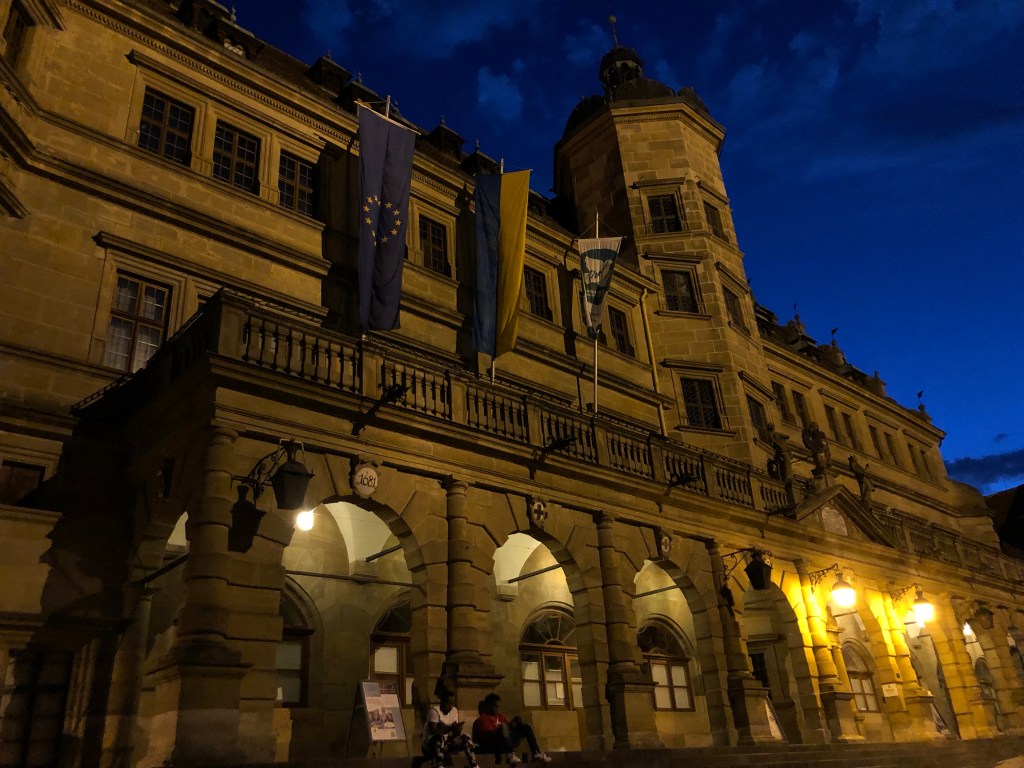
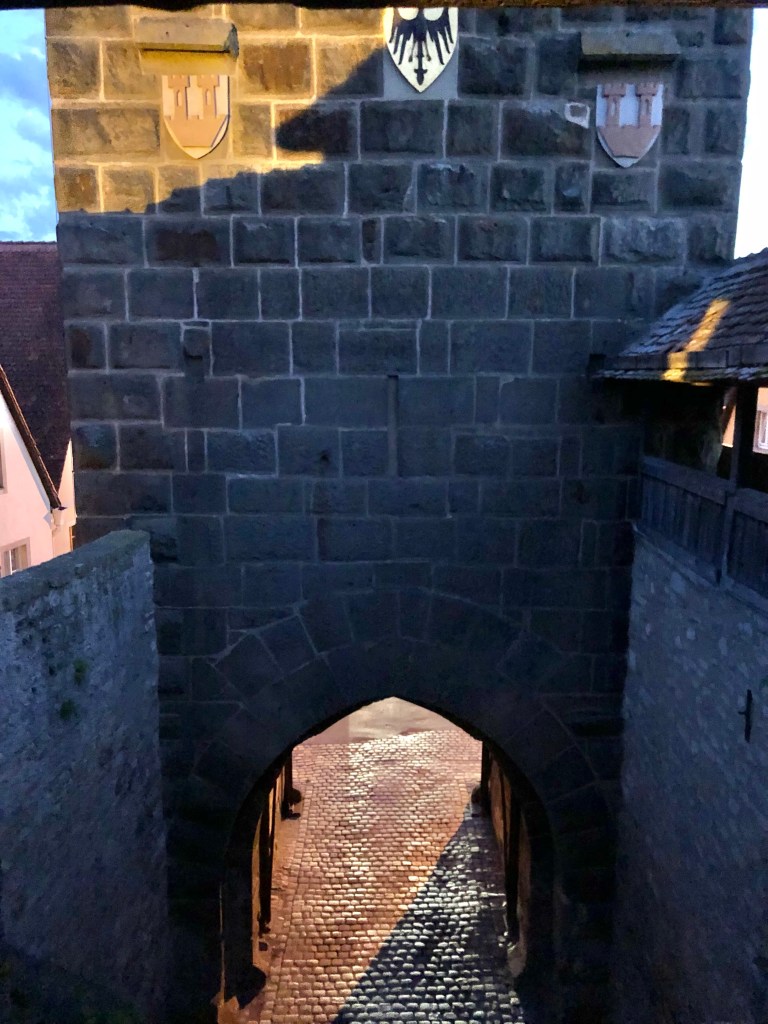
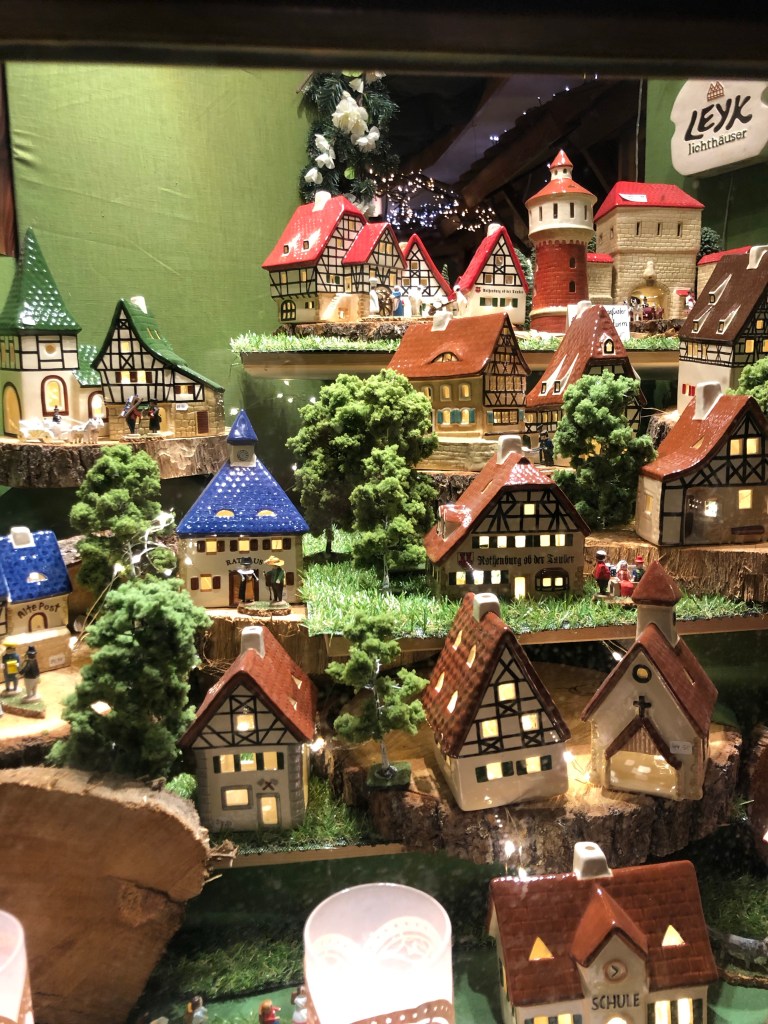

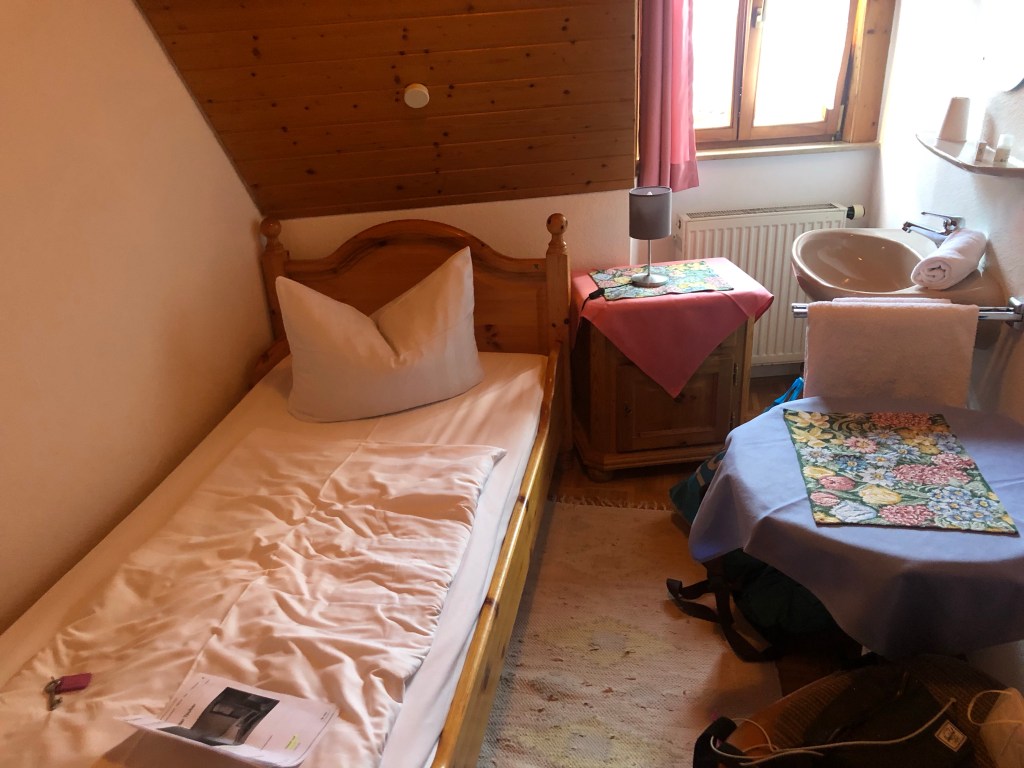
My little inn was also adorable. All the doors operate via very old-fashioned keys. For breakfast, there was a huge spread of meat, cheese, bread, fruit, salmon, and vegetables.
It appears my travel bottle of Dr. Bronner’s soap was a casualty of the move from Berlin. All my socks were dirty, so I washed them last night in the sink with shampoo and was obliged to walk around the town in flip-flops this morning.
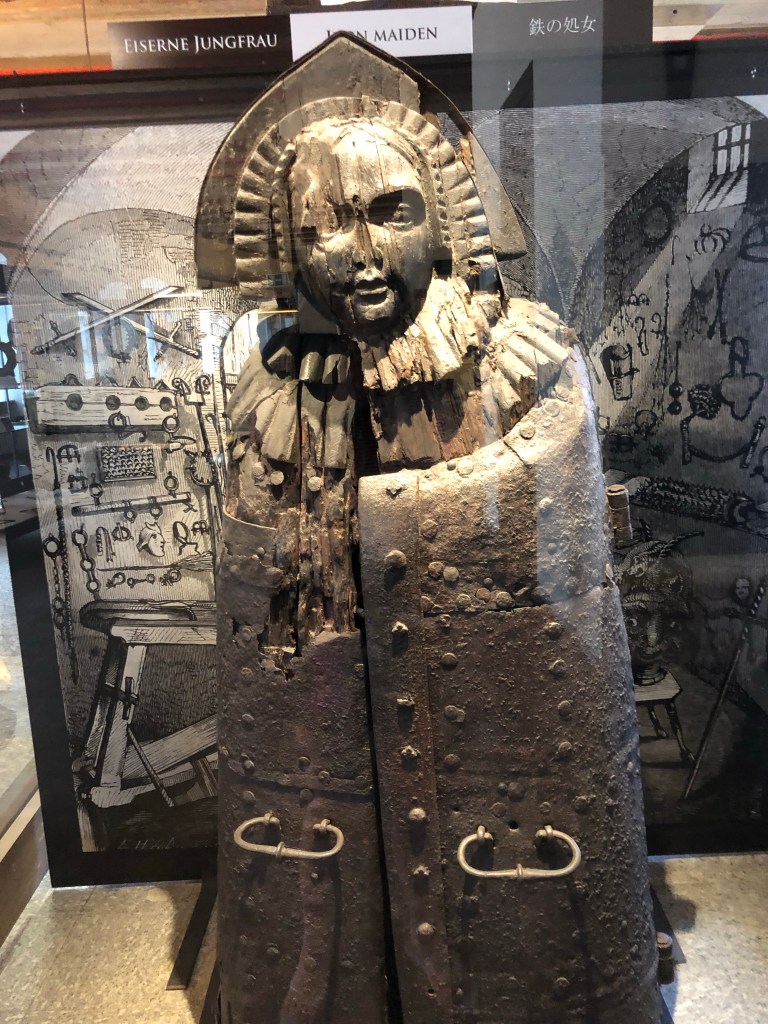
First stop was the Medieval Torture Museum. I walked into this expecting it to be a goofy “exploitation museum,” but in fact, it was more dignified than that. The museum had many information cards thoroughly explaining the medieval justice system, investigation methods, civil punishments, and the evolution of legal proceedings spanning the past eight centuries. As it turns out, medieval people were a lot like us. They were dealing with social problems at the time with some of the few methods available to them.
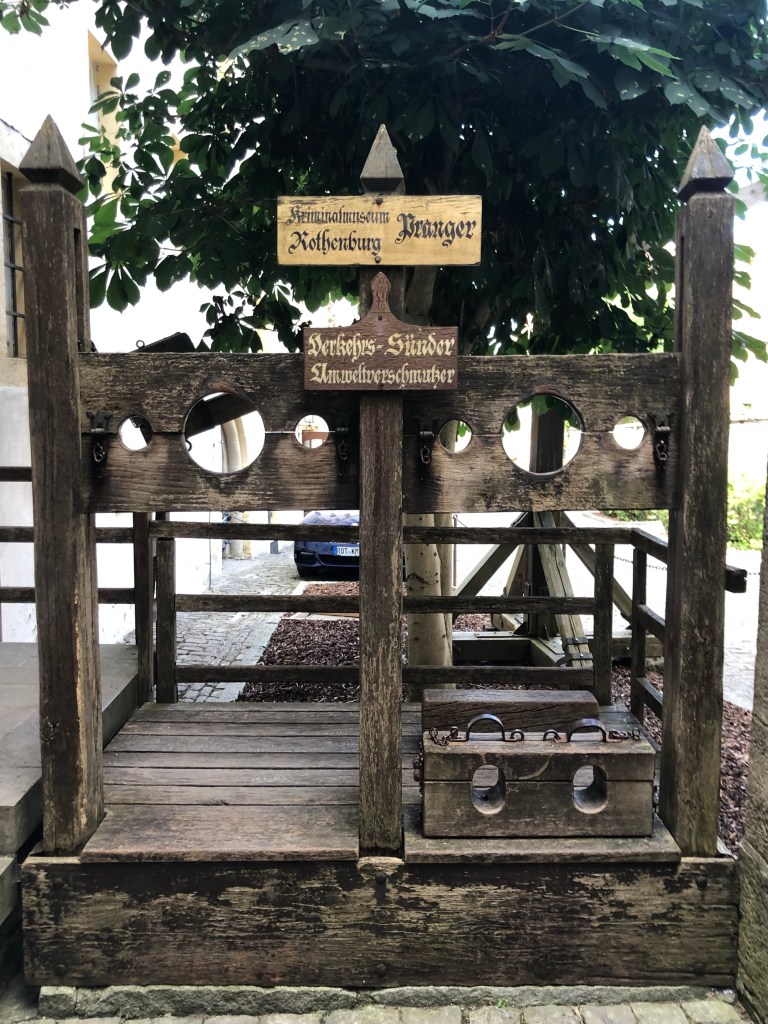
Before there was a legal system, taking revenge on someone yourself was the only way justice could be enacted. Government intervention in judicial matters starting in the 1300s helped put a stop to blood feuds and endless cycles of revenge.
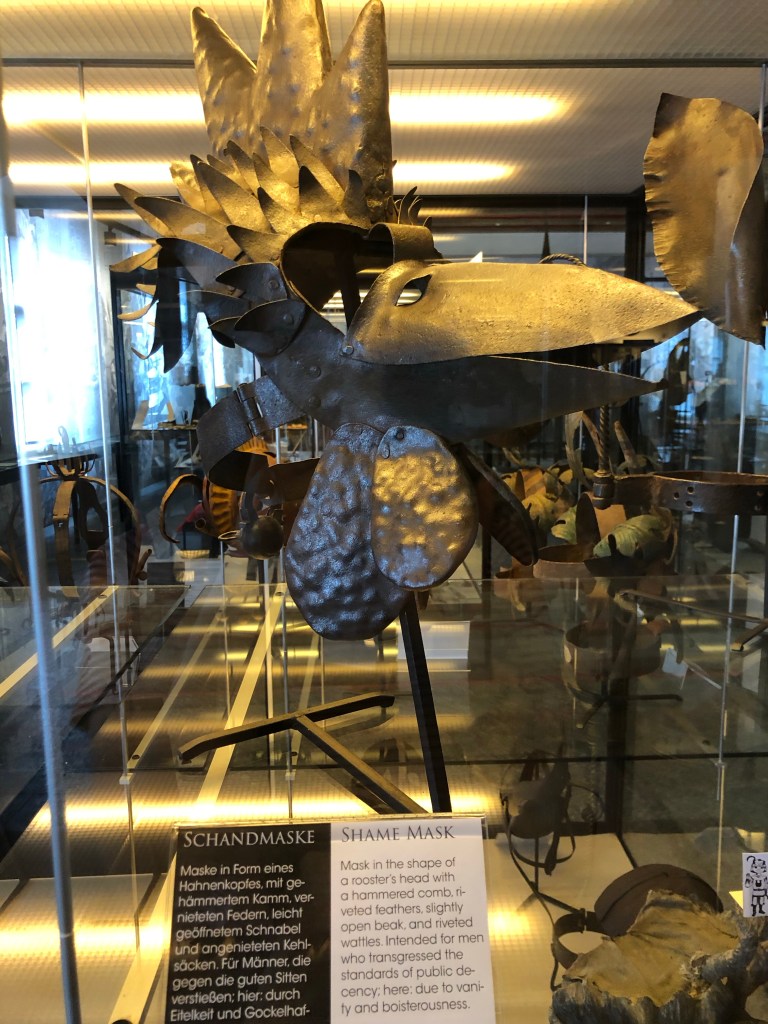
There were various punishments in medieval Germanic towns, ranging from public humiliation to execution, depending on the severity of the crime. Gossiping, drunkenness, arrogant bravado, and loud quarreling could all be punished by public shaming. Offenders would sometimes have to wear shaming masks that corresponded to their crime.

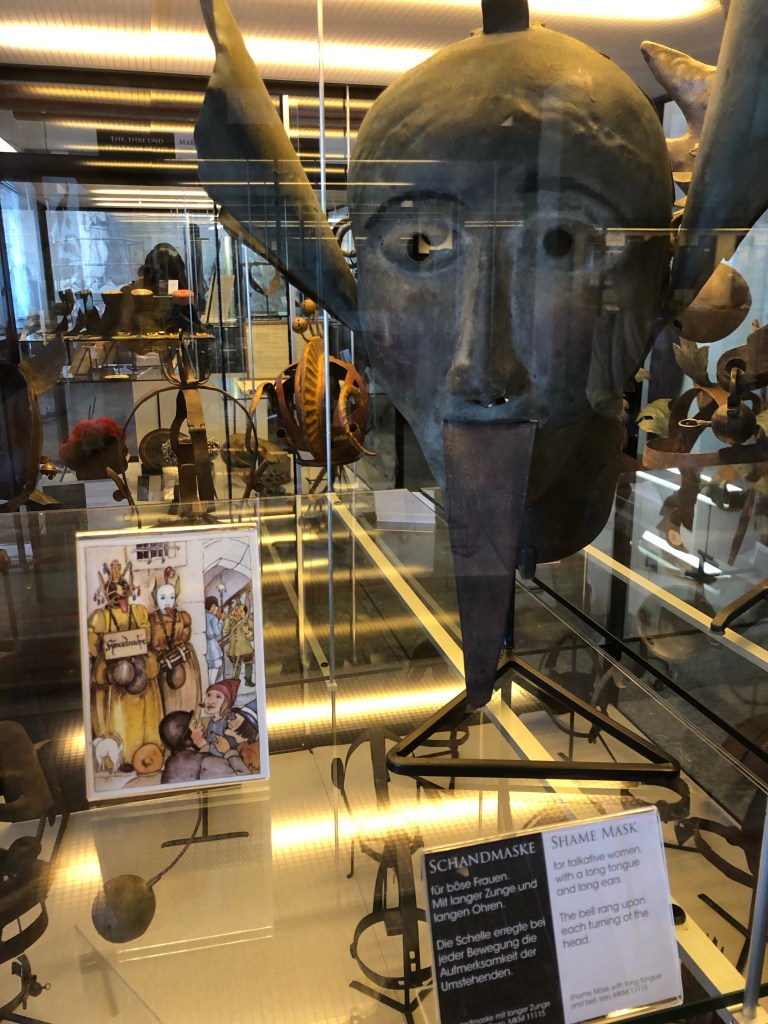
Dressing higher than your social class (and therefore “pretending” to be of higher class) was a crime, as was gambling more than what you had on your body (like your house or farm).
One crime that got a lot of attention was premarital sex. This was a huge deal for women. Normally, when girls were married, they rented a special colorful veil and costume. Women known to have had sex before marriage were forced to wear a straw veil, be publicly shamed, and either enter the church through a “black gate” or (in the worst case) be married at an inn. Children born out of wedlock were “illegitimate” and did not have the same rights as children born to married couples. They were not considered of good blood and were condemned to a low social class, regardless of who their parents were.
My analysis is that the reason for many of the medieval laws was, first, keeping local peace. The public humiliation for gossiping, gambling, and rude behavior falls into this. But more importantly, these laws maintained inheritance and social hierarchies. Social status was much more important than money, and the nobility were separate from the peasants. Special priority was placed on making sure that women did not have sex before marriage.
Why? Well, families wanted to make sure they could keep their power and wealth concentrated, maintain patriarchal inheritance, and keep plans for their childrens’ futures in order. So, the need was felt to strictly regulate sex and pregnancy.
It’s so interesting for me to think about how many of our modern institutions are based on these medieval ideas. Conservative Christians still prioritize preventing sex before marriage, keeping that ancient shaming practice alive — even though the true reasons for the laws were made irrelevant by the advent of safe sex. With modern technology (contraceptives, protection, and STI testing) — along with the fact that people are now individualistic and marry by choice instead of via family negotiations — the issues that made medieval Christians shun premarital sex are incredibly archaic.
The same is true for medieval torture methods and gory executions. Back in those times, it was very difficult to catch criminals. With the exception of prosecuting “witches” (since making a pact with the Devil isn’t something you can find physical evidence for), some type of evidence or probable cause was needed for torture to proceed. And an execution would not he carried out unless there was either hard evidence or a confession. Torture actually had a procedure to it (with 3 total rounds), and the goal of eliciting a true confession, as ghoulish as it was. As for executions — few criminals actually got caught, so the small percent that did were subject to brutal executions in order to scare other would-be criminals. This practice whereby the state “made an example of” the few unlucky criminals who were caught continued in Europe until the 1800s, when controversial cases (such as a young mother in London being hanged for stealing a trifling amount) spurred reform. Now, our police and justice system is advanced enough that we shudder at such harsh methods for deterring crime.
Although, maybe we should take a look in the mirror. Were some of our federal detention centers erected in the name of stopping terrorism so different from a medieval torture chamber? In some ways, they may be worse. And what about our prisons… and the fact that false confessions under modern-day police interrogations are common? The U.S. in particular still has a long way to go in terms of creating a humane, reform-based system for offenders. Hopefully people 300 years from now will walk, disgusted, through museum recreations of our modern prisons.
My next big stop was the famous viewing tower at the town hall. This is one of the tallest spots in the city. I entered the building, then climbed and climbed and climbed.
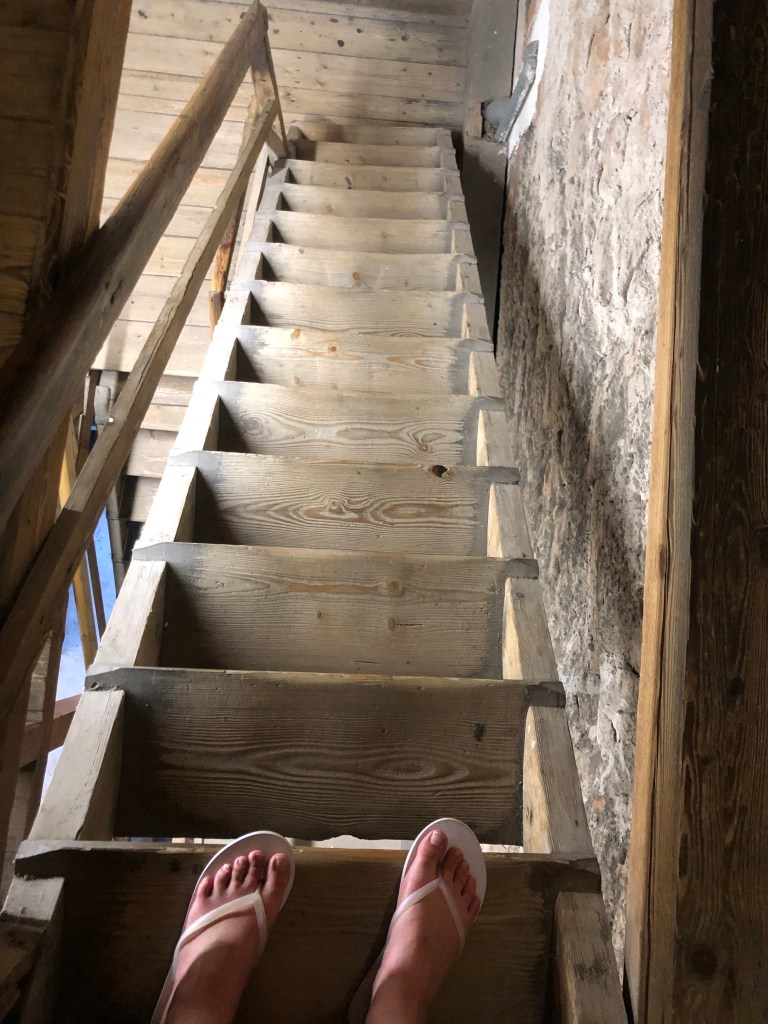
Okay, now this is where my footwear became a serious issue. As I neared the top of the tower, the stairs narrowed. To get onto the viewing platform, you must be somewhat acrobatic — you climb up a narrow stepladder and then, with the help of some handles, hoist yourself up out of the opening in the floor of the platform.
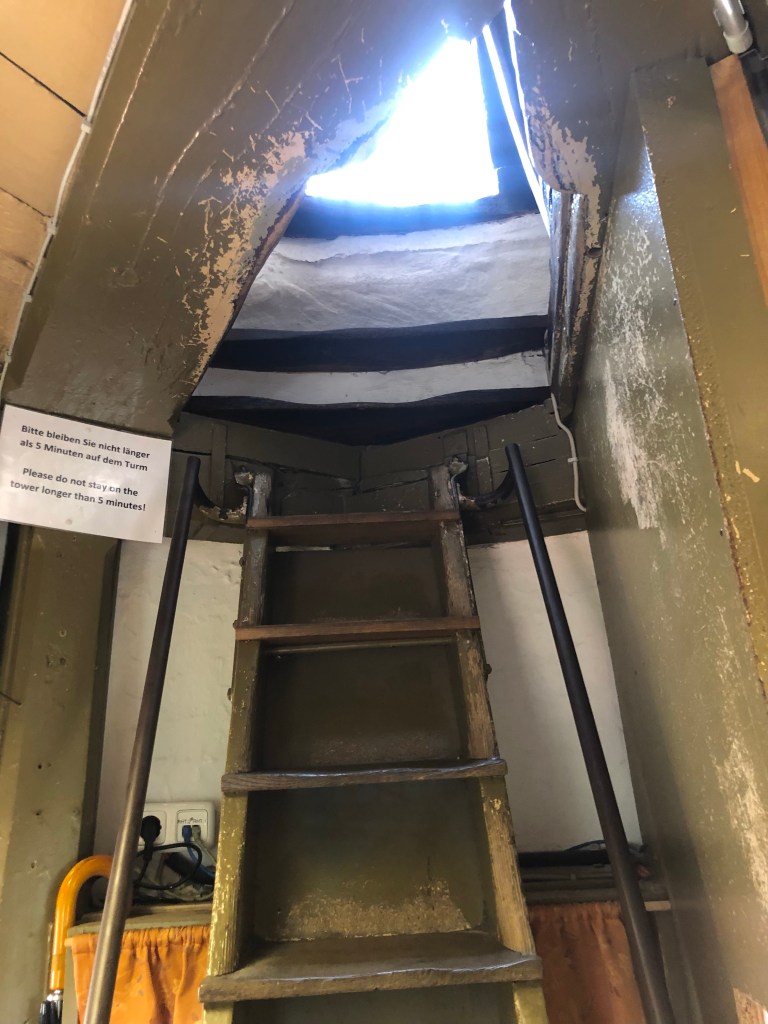
There’s an attendant just below the viewing platform that collects 2.50 euros from you. When confronted with a tourist wearing $1 flip-flops and a Jägermeister bandana, I thought maybe she’d say “Hell no, come back up here with actual shoes on.” Maybe I HOPED she’d say it. But she let me pass.
Well. The climbing part went fine, and the view was amazing!!

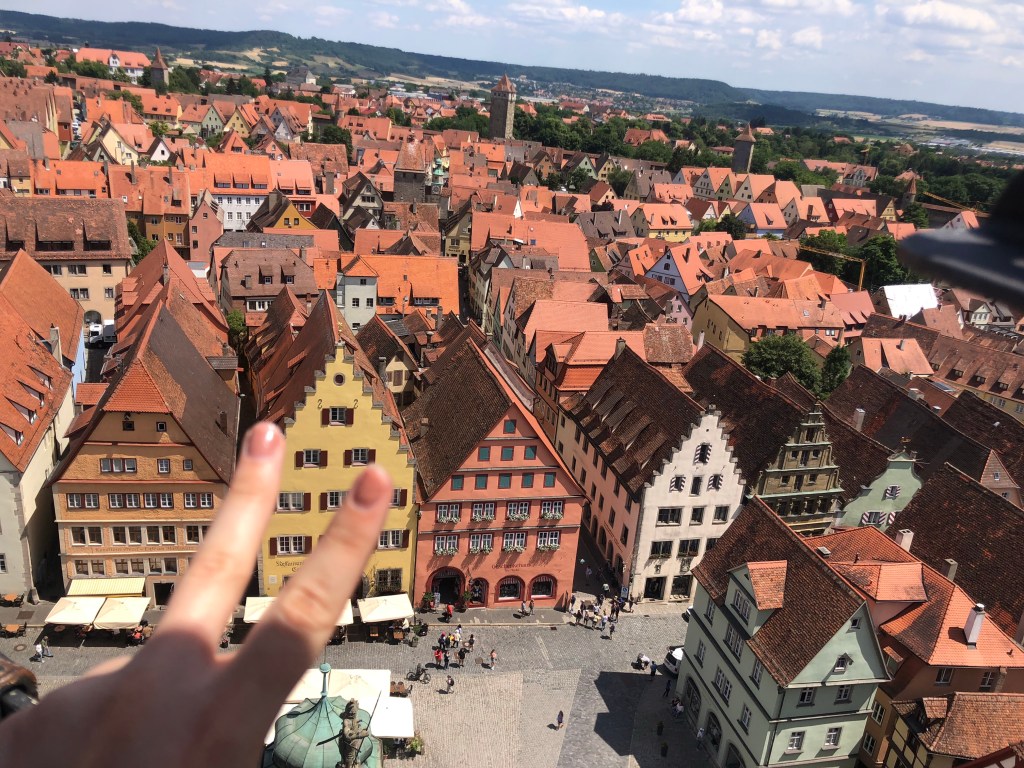
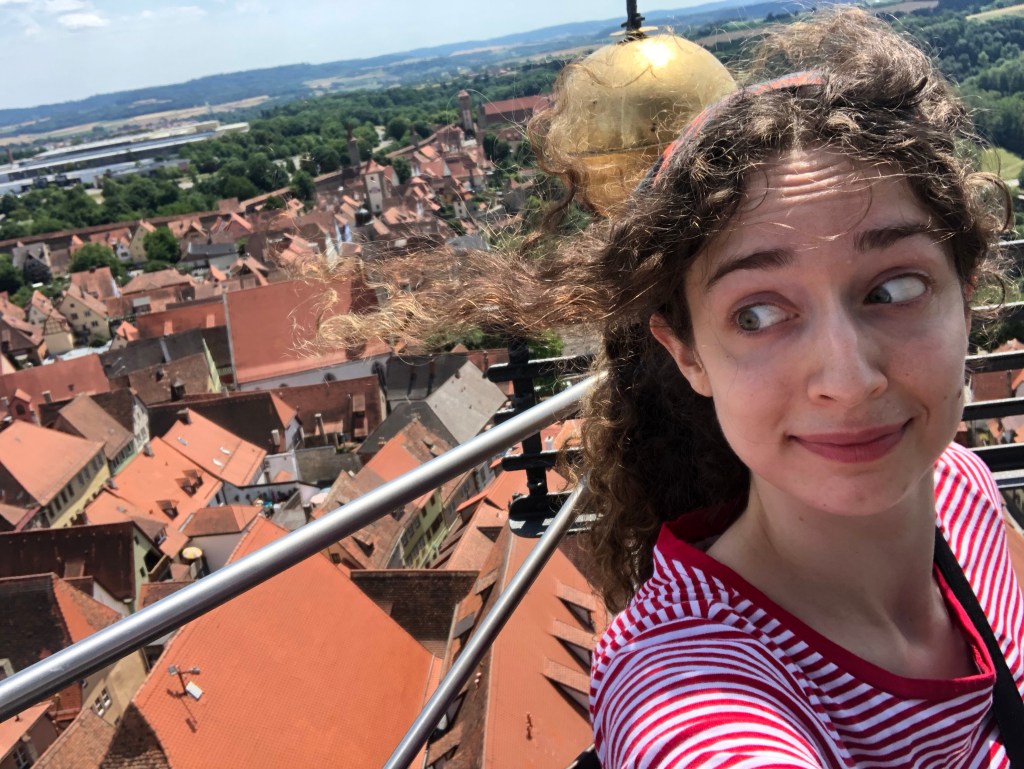


I do have a moderate phobia of heights, so I was taking little baby steps and constantly gripping onto something. Eventually my legs started to tremble and it was time to go back down.
But the fear had also made my feet sweaty. And oh my god. My flip-flops were now SLIPPERY. Like, they were sliding off my feet with each step. So I now had to kneel down, descend through the opening backwards and climb down the narrow stepladder. It was terrifying. I made sure I had a good handhold at all times.

I’m resting now in my room at the inn. Augh, I forgot to mention that I also went through a bunch of the adorable shops, including a Christmas store with nutcrackers and a bunch of cuckoo clocks that reminded me of Gipetto’s (sp???) workshop from Pinocchio. The German nutcrackers are especially nostalgic, as my parents have a good few.
 Eva Adventures
6 responses to “Day X + XI: Medieval torture in a fairytale town”
I’ve certainly had some anxiety about your solo travel but never considered the risks of sweaty flip flops climbing rickety stairs in a gothic town hall. Something to add to the list. I hope the socks are dry! 🙂
LikeLike
From one acrophobic to another: most impressive! You got the views, the selfies, and down the steps in one piece. Great post–
LikeLike
The sweaty one dollar flip flop story is both hilarious and terrifying. I’m glad you survived it in one piece! The medieval crime museum sounds fascinating. Great description!
LikeLike
Eva, I so enjoyed the history. I had forgotten so much of it.
Thank you. I am so pleased you are enjoying your travels and posting your adventures to the rest of us ❤️❤️❤️
LikeLike
You captured how beautiful Rotenburg is! Did you see any storks nesting on roofs there?
LikeLike
I did not! What an interesting question. All I remember seeing, bird wise, were some pigeons drinking from the fountains
LikeLike