Time for some griping, I guess. I’m not sure where I got the impression that Germans are ruthlessly efficient, or that their trains always run on schedule. It’s not true. Every day that I’ve taken a long trip in Germany, at least one of the trains has been >30 minutes late.
This morning, I was waiting for the once-hourly train out of Rothenburg o.d.T. when a German announcement came on the speaker system. I understood nothing except for the dread-word “Entschuldigung” (“sorry”). I knew then that I was doomed. Beside me, a woman with wavy white hair huffed in exasperation. She tried to speak to me in German, but seeing my confusion, she pointed behind her and said “bus.” I couldn’t quite decipher the wrinkled schedule affixed to the station, but was able to tailgate the other would-be railway passengers onto the correct bus.
I think I’m still lucky though. When my mom traveled to Germany, she didn’t have anything but those bus schedules and some paper maps. But with my phone, a good power bank, and a preloaded European SIM card giving me cell data, I’m able to get myself out of almost any scrape and reroute to a different train.
All told, this three hour trip is taking me about five hours. So now that I’m on the way, let’s talk about Munich:
Munich, (München, meaning “Home of the Monks”) is the capital of Bavaria Land (state) in southern Germany. It is Bavaria’s largest city and the third largest city in Germany (after Berlin and Hamburg). Munich, by far the largest city in southern Germany, lies about 30 miles north of the edge of the Alps and along the Isar River, which flows through the middle of the city.
The city is now known for containing a mix of modern tech and traditional Bavarian culture. I’m told that while Bavaria itself is rather conservative and right-wing, Munich is a liberal retreat within the region. (Fun fact: it was also the home of Freddie Mercury for years.)
Munich originated with the Benedictine monastery at Tegernsee in 750 CE. In 1157 Henry the Lion, duke of Bavaria, granted the monks the right to establish a market where the road from Salzburg met the Isar River. A bridge was built across the Isar the following year, and the marketplace was fortified.
Notable historical rulers of Munich included the Wittelsbach family (for 700 years). Munich increased in wealth and size and prospered until the Thirty Years’ War, when it was occupied by the Swedes under Gustavus Adolphus, in 1632, and in 1634 a plague epidemic resulted in the death of about one-third of its population.
Louis I (king of Bavaria from 1825 to 1848) planned and created modern Munich, and his architects established the city’s characteristic appearance in the public buildings they designed. The 19th century was Munich’s greatest period of growth and development. Protestants became citizens for the first time in what had been until then a purely Roman Catholic town. Munich’s cultural importance in Europe was enhanced when Louis II, by his championing of the composer Richard Wagner, revived its fame as a city of music and the stage. (Wagner is best-known to me from the classic Looney Tunes parody “What’s Opera, Doc?”)

The rule of the Wittelsbach dynasty finally ended with the self-imposed exile of Louis III in November 1918, and, in the aftermath of World War I, Munich became a hotbed of right-wing political ferment. It was in Munich that Adolf Hitler joined the Nazi Party and became its leader. The beer cellar where he held meetings that led to the Beer Hall Putsch (“rising”) against the Bavarian authorities in November 1923 can still be seen.
In World War II Munich suffered heavily from Allied bombing raids, which destroyed more than 40 percent of its buildings. (Not as bad, relatively… considering what Berlin went through.)
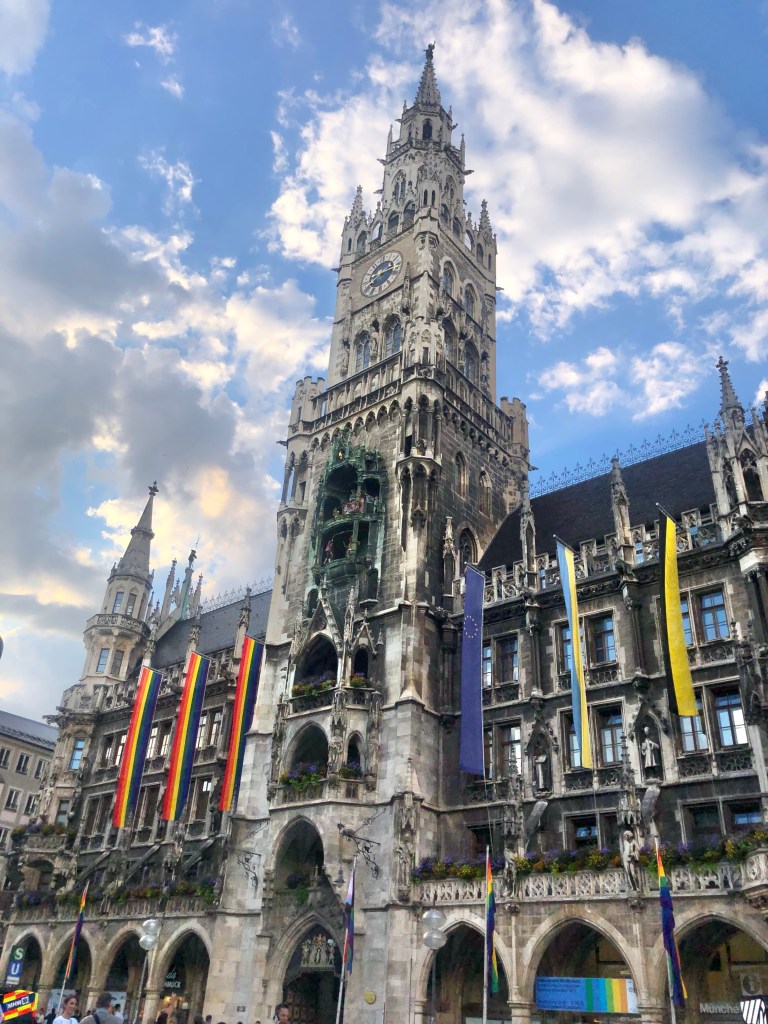
Today, Munich manufactures many types of goods; it has several of the largest breweries in Germany and is famous for its beer and its annual Oktoberfest celebration. Munich is also a major tourist destination. The city is a center of the banking and financial industry, and it has one of the largest wholesale markets in Europe for fruit, vegetables, and animal produce.
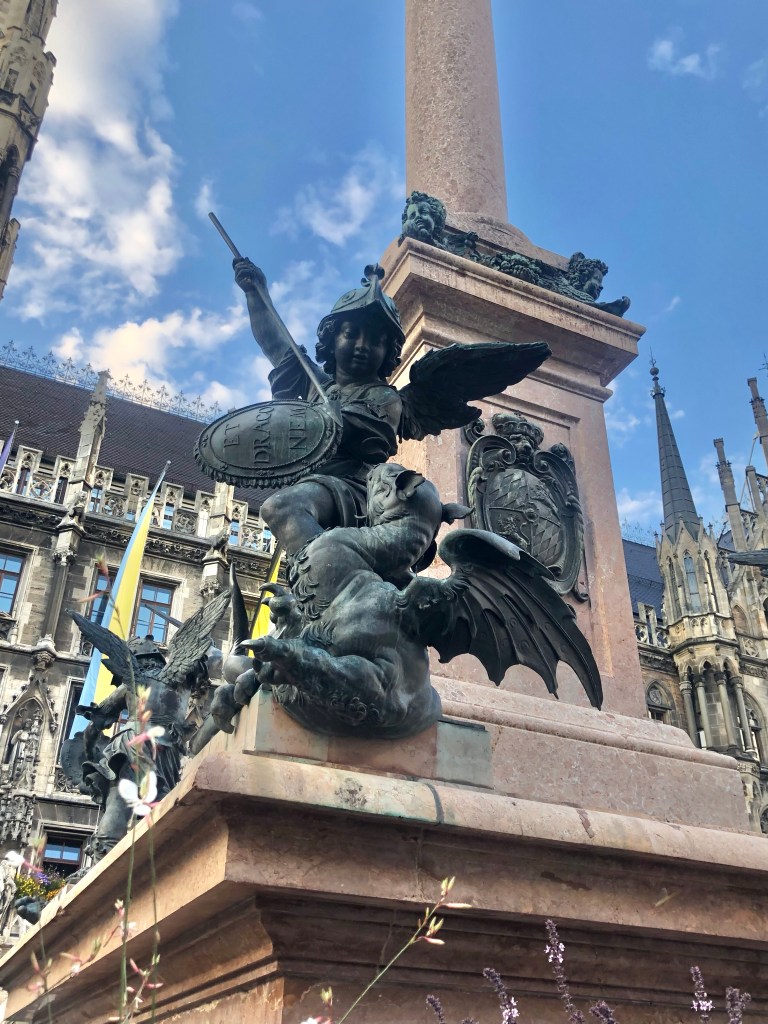
The landscape of Munich is characterized by Rococo and Baroque architecture. It has many famous museums and art galleries.
In 1972, Munich hosted the Summer Olympic Games, and an event known as the Munich massacre unfolded. Members of the militant Palestinian group Black September took 11 Israeli athletes hostage during the 1972 Olympic Game, and all the hostages were killed.
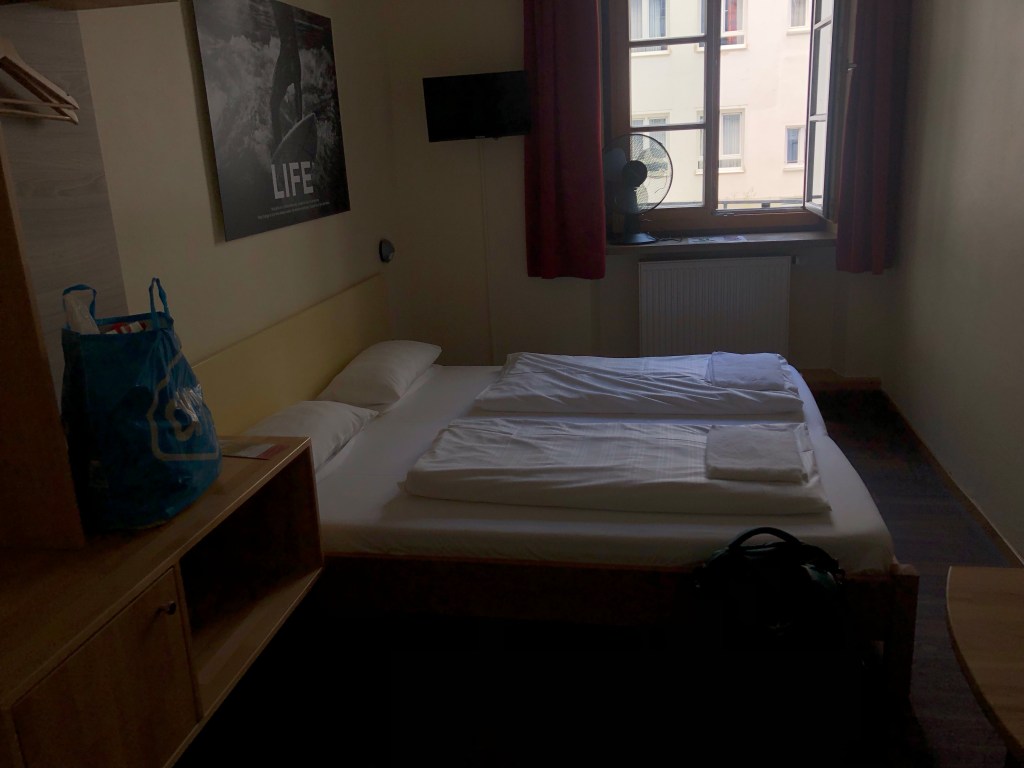
My hostel for this destination is large and much more hotel-like. There’s a also private bar for hostel guests, which doubles as a breakfast buffet room and common room.
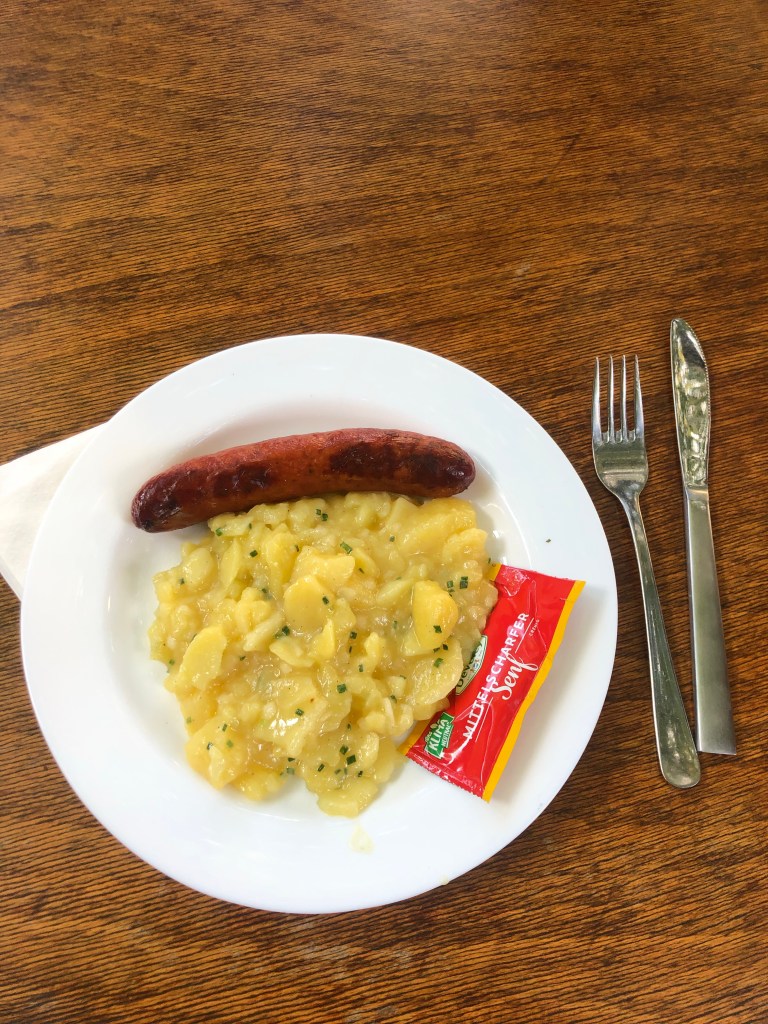
As I walked the streets of Munich, I realized that this place had a much stronger folksy German identity than Berlin. It’s definitely a different experience. I strolled through the farmer’s market shortly before closing, and observed that it is a year-round Volksfest. Over a hundred people were enjoying traditional German food and massive mugs of beer at outdoor tables. As I wandered alone through the mirthful crowd with my plate of wurst, searching in vain for an open table, it felt like high school all over again.
In addition, there are places to buy Tracht (traditional Bavarian folk garb) on every corner. Because everything closes at 8 or 9, today’s walk felt like just a preview. I will be looking through the thrift stores tomorrow for something that speaks to me.
 Eva Adventures
8 responses to “Day XII: Munich, city of monks and lederhosen”
I am enjoying your puns! I didn’t know about Munich’s monk heritage. I have distinct memories of the 1972 Olympics because of the interest in Mark Spitz (check him out!) and watched the Olympics most days with our next door neighbors. I could not understand the hostage situation as a 10 year old and don’t remember asking an adult about it.
LikeLike
Oh my goodness are we having the most fun following along with you. I was reading your blogs to Mom and she lit up saying” that little girl traveling alone, she is so brave!” I cannot wait to read the next day’s adventures. Keep ‘em coming honey! Love you!
LikeLike
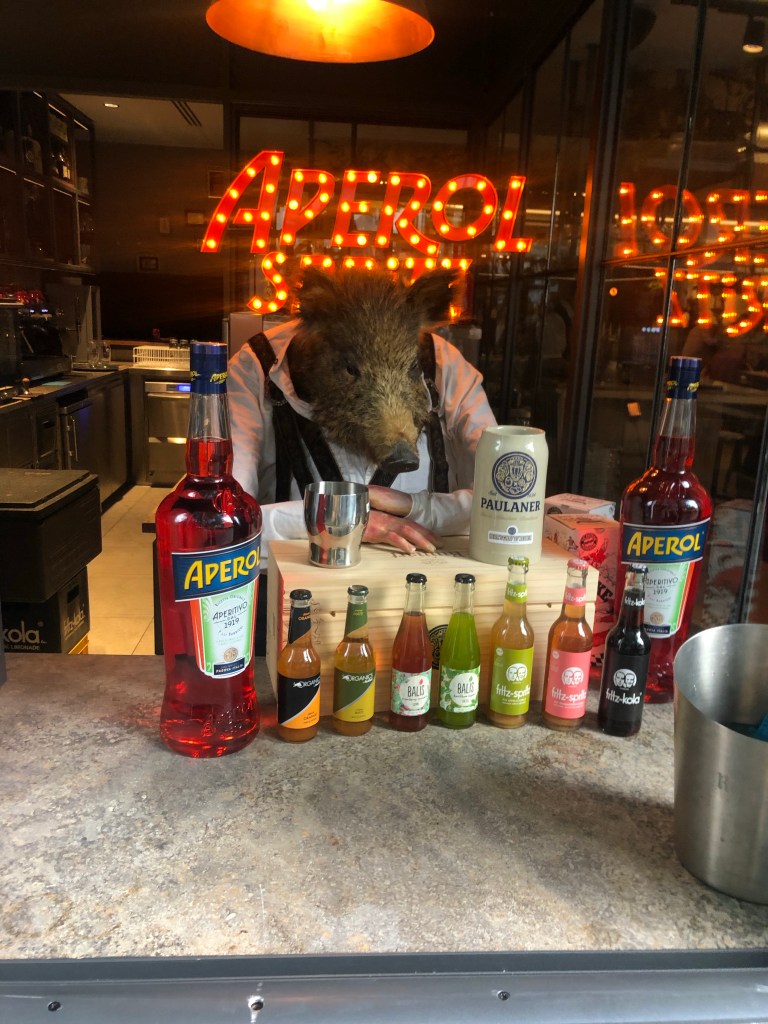
Okay that boar head… yikes. What is your favorite German street food so far?
LikeLike
My favorite so far has been the pretzels 🥨 . A train station had a “pretzel sandwich” thing where the pretzel was cut in half and there was soft cheese with chopped up chives inside. Sooo good
LikeLike
That pretzel sandwich sounds quite palatable. I am really enjoying your blog, especially when you give your impressions of the people you meet and the things you experience. Keep up the excellent posting.
LikeLike
Thank you!! 🥨
LikeLike
What is your remaining agenda. I would like to read ahead on the areas. Love your blogs
LikeLike
Remaining cities are Füssen (Germany), Salzburg (Austria), and Budapest (Hungary)! Plus a “bonus” day in Amsterdam because of a flight delay
LikeLike