First, an Italian dinner, what feels like my first “healthy choice” in a month:
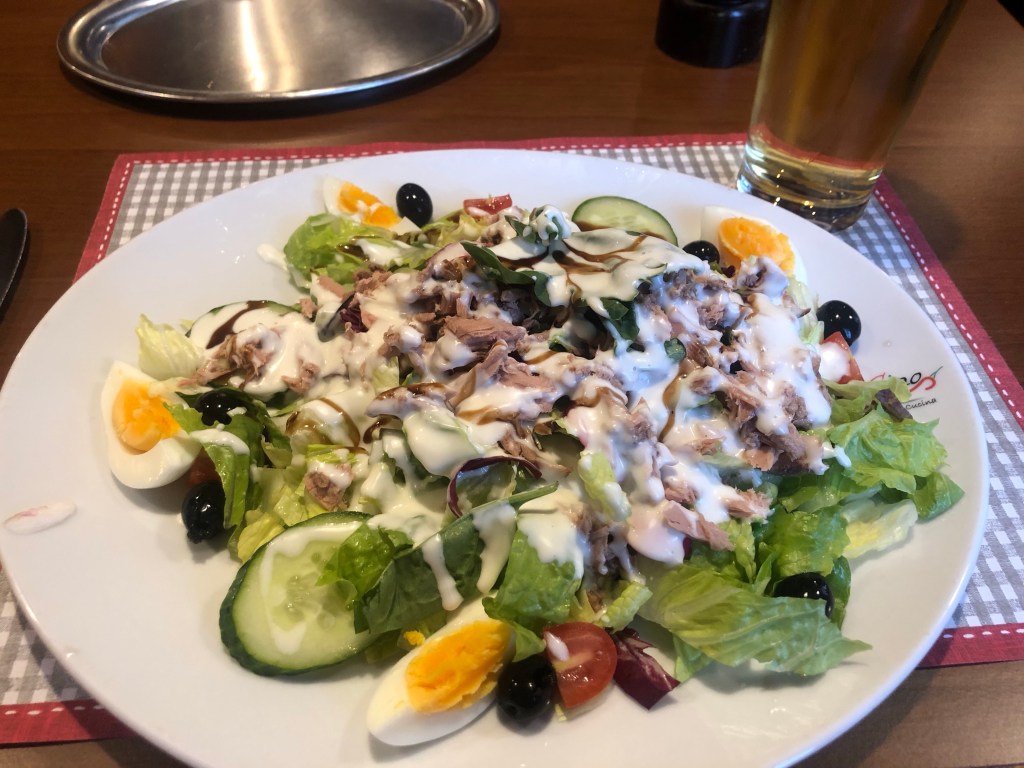
I was hoping to get some healthy food from the supermarket. But did you know that all the supermarkets here close at 9 PM, and also close on Sunday?? Vexing.
Anyway, this morning was a race out of the hotel at 8 AM to get to the Schloss Neuschwanstein. I must emphasize again that the German castle crew are unsympathetic to your misfortunes, and they’ll warn you many times that there’s no entry and no refund if you’re late! I didn’t want to risk it.
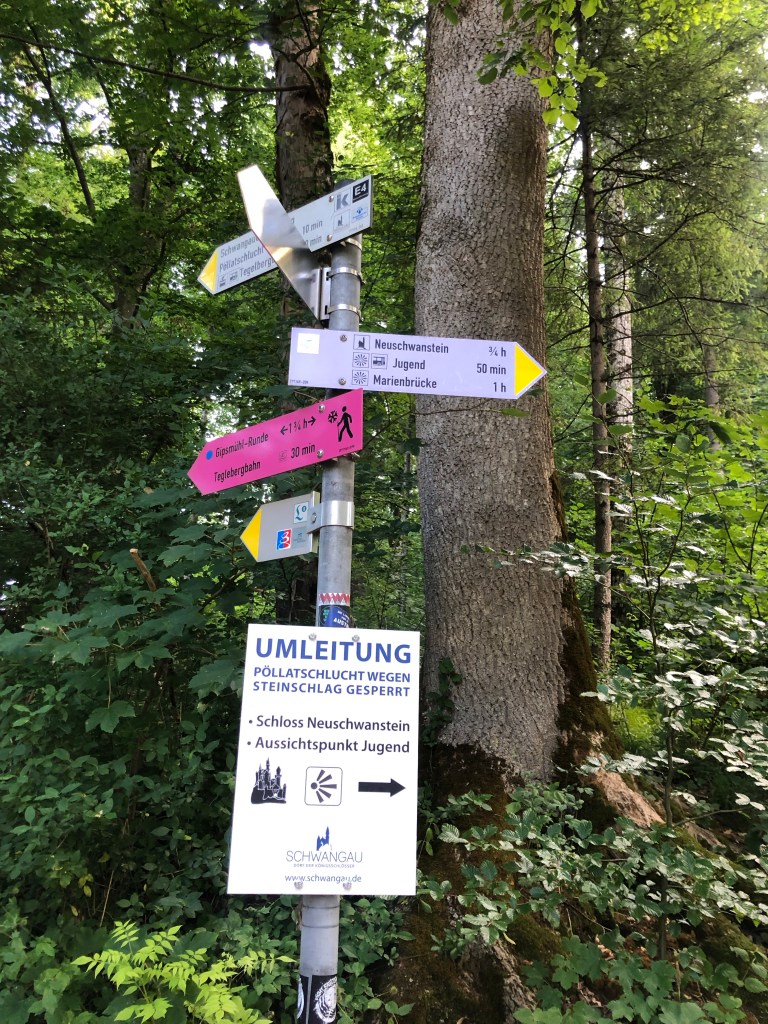
There are two good choices to get up to the castle: in style (a horse-drawn carriage), or not (hiking).
I chose the way of the pedestrian, not the equestrian. Signposts estimated a 45 minute walk. Which, I think, is due to the steep incline of the footpath.
They didn’t count on the tiger blood running through my veins. I arrived at Neuschwanstein with an hour to spare.
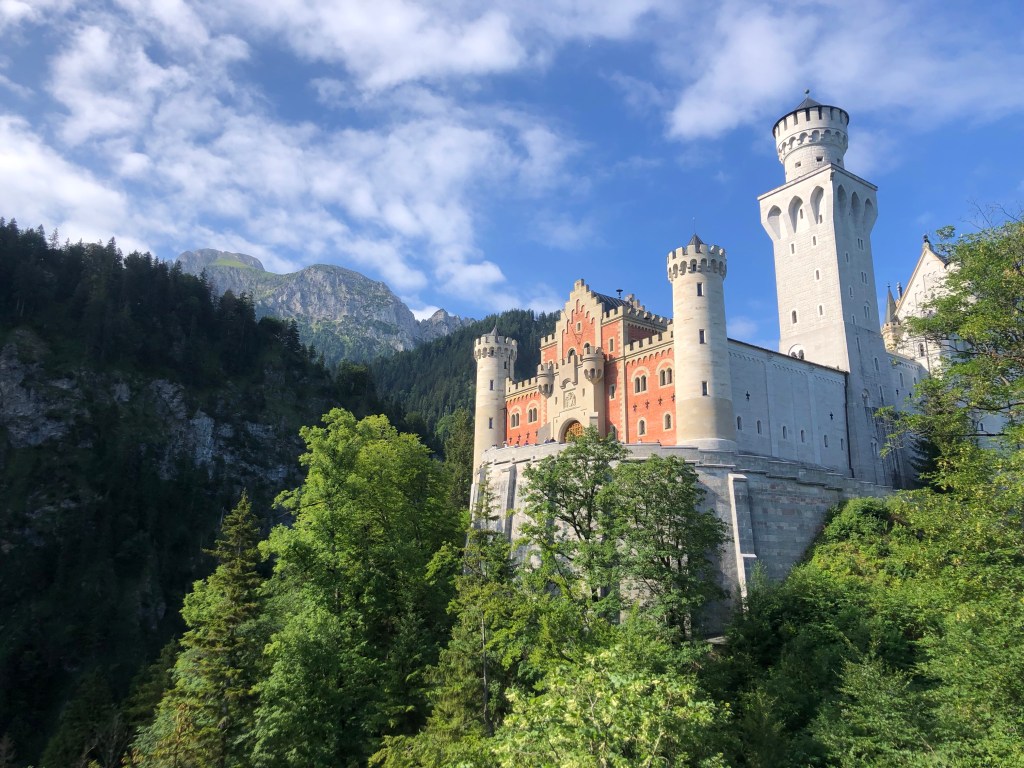
Lugwig II’s castle was definitely a good choice to do second; it’s spectacular, and much larger! Like the first, there’s no photos allowed inside.
Shortly after Ludwig II inherited the throne at age 18, the free kingdom of Bavaria was defeated in war and forced to join Prussia. Ludwig II became subservient to the ruler of Prussia and lost confidence in himself as a ruler. While his real-life power was taken away, he isolated himself in the world of fantasy and the medieval kings of the past.
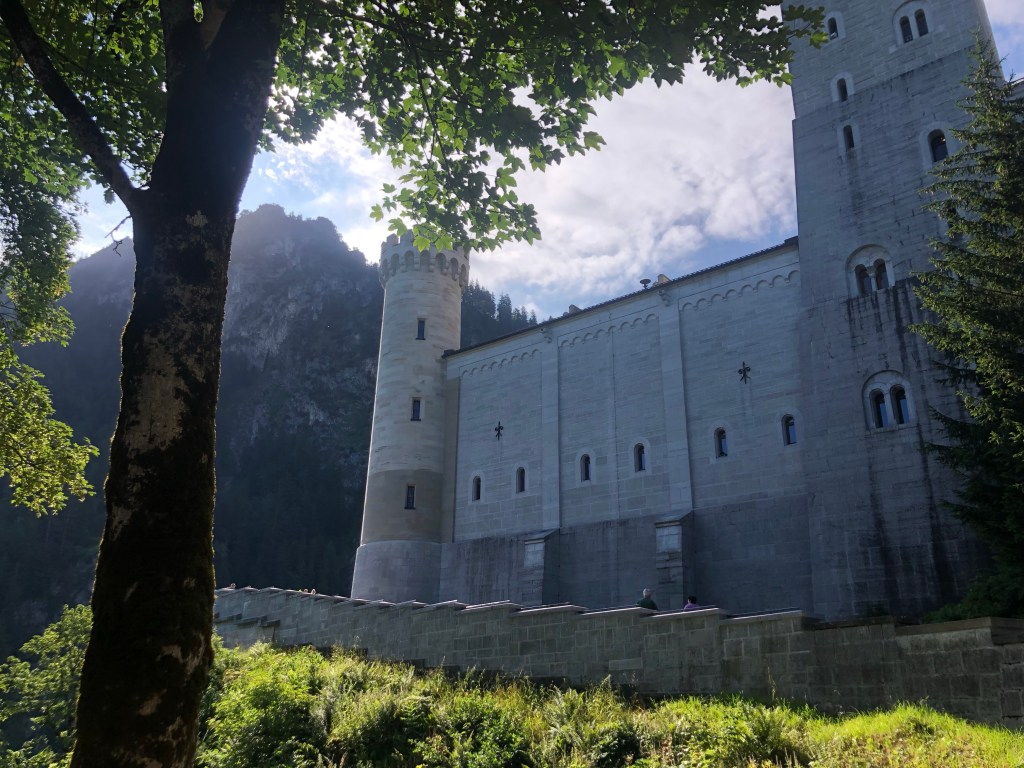
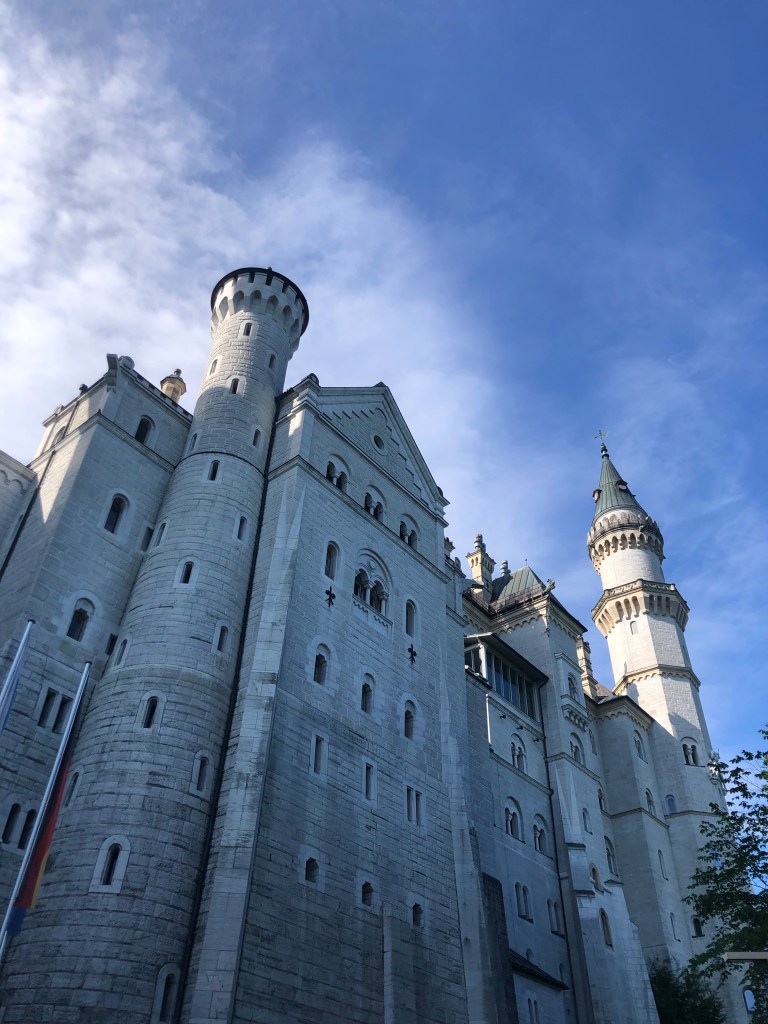
The massive, opulent castle was for his enjoyment alone, and he did not permit visitors — which is indeed eccentric, and probably insane. I understand his cabinet’s frustration. In my opinion, a work of architecture like this — built from royal coffers enriched by the people — should be accessible to the people. Even if it’s just as sightseers or supplicants. What is the point of building a castle with huge communal spaces that are always empty? It’s almost haunted… just a shell of what it should be. Eventually, Ludwig was taken into custody after being declared insane in his bedroom at this castle.
It’s even more opulent than Hohenschwangau, with lots of gold and ornate painted designs. The throne room features grandiose illustrations of past great kings and scenes from world religions. Another room, a sort of banquet hall with Hogwarts-esque hanging candles, is modeled on a dance hall chamber with a bower for singers — but of course, no one sang there. The candles would all be lit for Ludwig alone.
The other rooms feature painted murals on the walls, this time of scenes from Wagner operas and German medieval folklore, such as the tale of a prince turned into a swan. Royal blue, Ludwig II’s favorite color, and swan motifs are both found often throughout the castle.
(Pyotr Ilyich Tchaikovsky is said to have taken a great interest in Ludwig II’s life, which may have helped inspire his ballet Swan Lake. (Which then inspired The Black Swan, a fantastic psychological horror movie about something completely different. But anyway…))
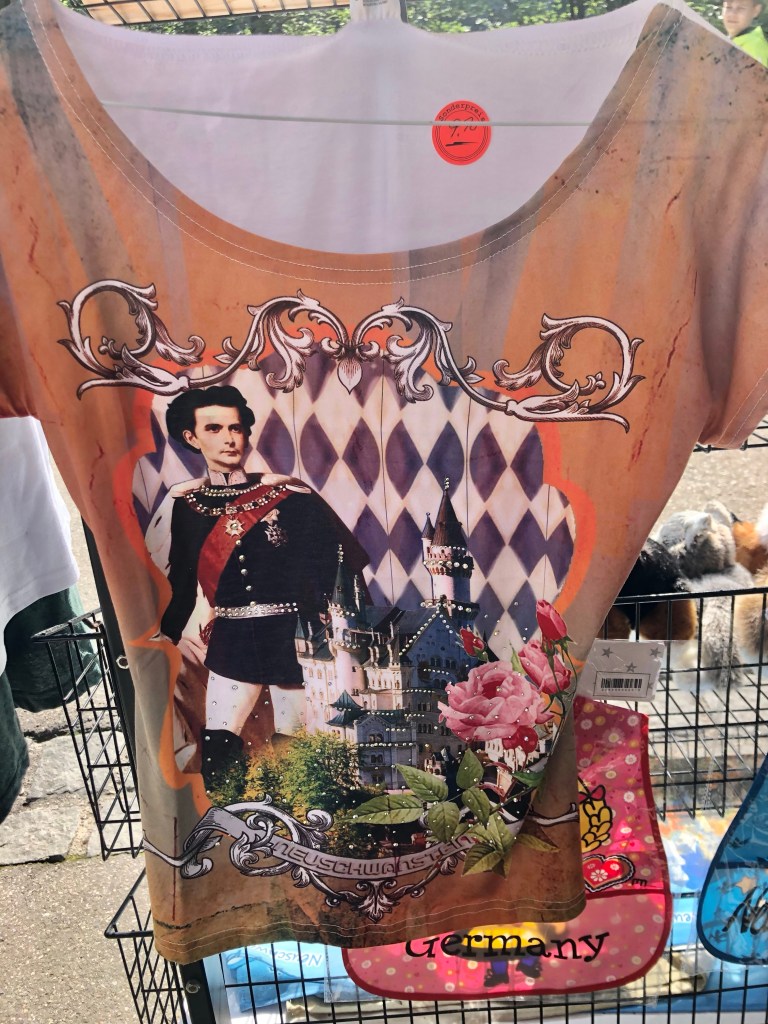
After lunch (bologna sandwich), I decided to head back to the hotel and relax. Also, I rented The Sound of Music in preparation for my next stop: Salzburg, in Austria. The movie is a favorite of my family’s and was, very famously, filmed in Salzburg.
If for some reason you don’t know, it’s a musical about a forgetful but kindhearted young nun (Julie Andrews), who is sent out to be a governess (AKA a live-in nanny) for a grumpy former military captain and his seven children. She rallies the unhappy household into the “Von Trapp family singers.” Meanwhile, the Nazis threaten to invade Austria.
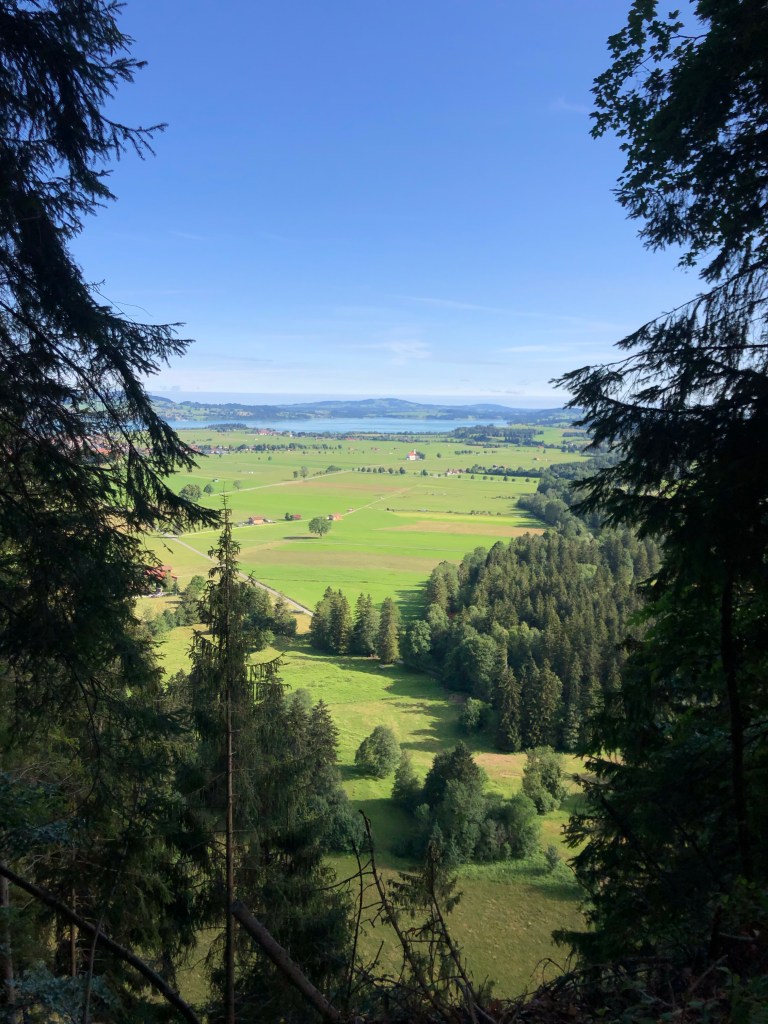
The film certainly looked familiar; the alpine landscape is very similar to Füssen and the surrounding area.
And Julie Andrews represents a certain role model of femininity for me. She’s kind yet assertive, earnest yet clever… skilled at music and sewing… and has a knack for parenting, while also talking to the children in a way that makes them feel like they’re her equals. Plus, her character is just a joy to watch. Many of the reactions she has are funny and unexpected — like how she responds to the 16-year-old daughter Liesl sneaking into the house after seeing a boy, here:
I think it’s easy for me to underestimate just how quick-witted and charming leading ladies from 60s films could be! I totally get how her performance is still iconic to this day.
Yet, as Maria puts on a skillful yet facile Alpine-themed puppet show with the children, I start to think about how she is confined to the domestic world, just as she was cloistered in the nunnery. She’s a sort of Austrian “angel in the house”: the unceasingly selfless domestic savior to the Captain and his children, creating joy where there was none. After she marries the Captain, she fades into the background.
Meanwhile, the Captain is the only one allowed to venture outside and engage with the world’s serious and loftier matters — family finances, politics, the encroaching Nazis, Austrian identity. Of all the songs, oanly the one he introduces — Edelweiss — is an anthem. Resonant and tenderly performed, it’s the song in the movie that may make you want to cry.
The whole movie makes me think about me. Especially after I spent part of the 5 hour train ride to Salzburg reading Already Toast: Caregiving and Burnout in America, a book that discusses how modern women are still influenced to embody traditional roles re: caring for ill family. And who is Maria, if not the ultimate caregiver?
I’ve never been content with Maria’s sphere — the realm of homemaking, of “helpmeet” to a powerful man, insulated from politics and certain harsh realities. I’m not good with kids. And as much as I’d like to be sunny, I’m prone to a more melancholic mood. Not unhappy — but skeptical, pensive, and serious. Brooding in solitude in whatever room (or crawlspace) serves as my “private study.”
But I’m not the best at changing the world, either. I’m no politician or general. Tittering nervously at my superiors, folding easily under questioning… I’m no Captain.
On very bad days, it feels like I’m incompetent in both realms — domestic and public.
Even so, I know I’m following my own path.
Maria stands in front of the Von Trapp estate, terrified to enter for her first day of work. All past knuckle-rappings from the Sisters about her “forgetfulness” weigh her down more than her bags. Maria, the “problem” of the abbey, a “flibbertigibbet,” a “clown.” And I see something then. Oh, God, that’s me. Miss Wetzel, Student of Medicine and Part-Time Clownery, standing in front of a gigantic research hospital, terrified. I’m certain my journey won’t go as sweetly as hers — but it will go, and go, and go. And I’ve got to survive somehow.
So I have confidence in confidence alone. I have confidence in me.
—
So what did I do in Salzburg? First I arrived at my lodging, Youth Hostel (AKA YoHo hostel). This will be my first time staying in a barracks-like hostel room with 6 beds. There was a large personal locker in the room that can be unlocked with my keycard, so I immediately shoved my things in there and hit the street.
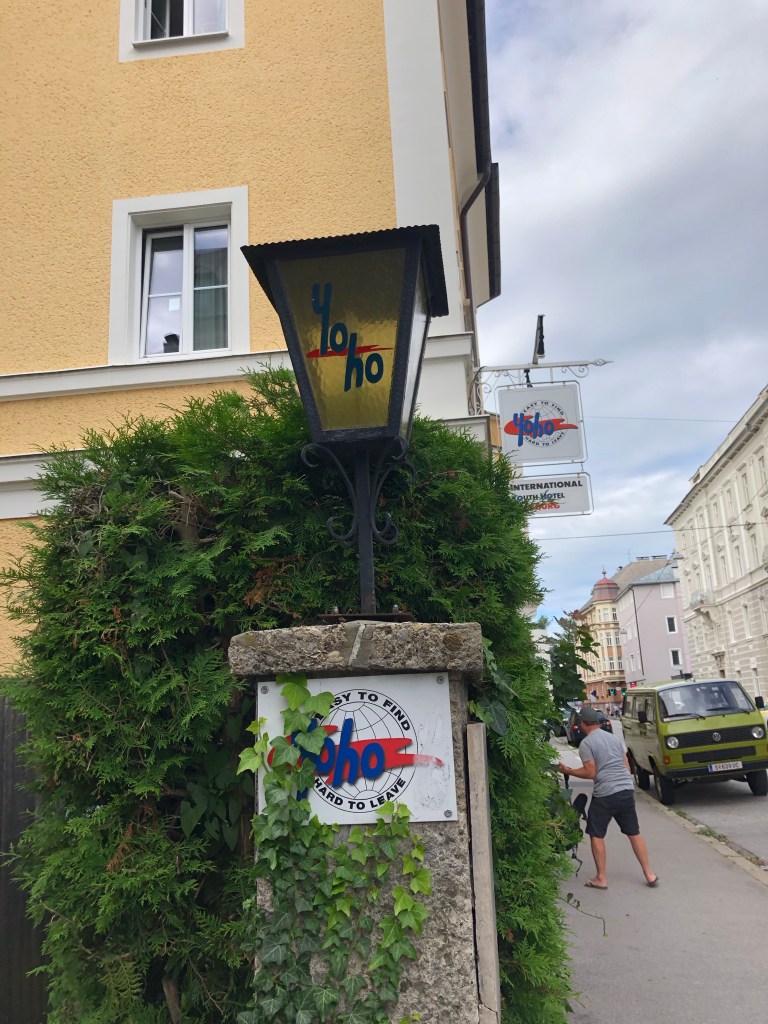
Honestly, I neglected to research much history this time. I barely know the basics about the nation I’m in, Austria. Perhaps a project for the next post? With that said, Salzburg nonetheless greeted me with clean streets and beautiful, stately buildings. A mysterious castle also loomed large on the horizon.
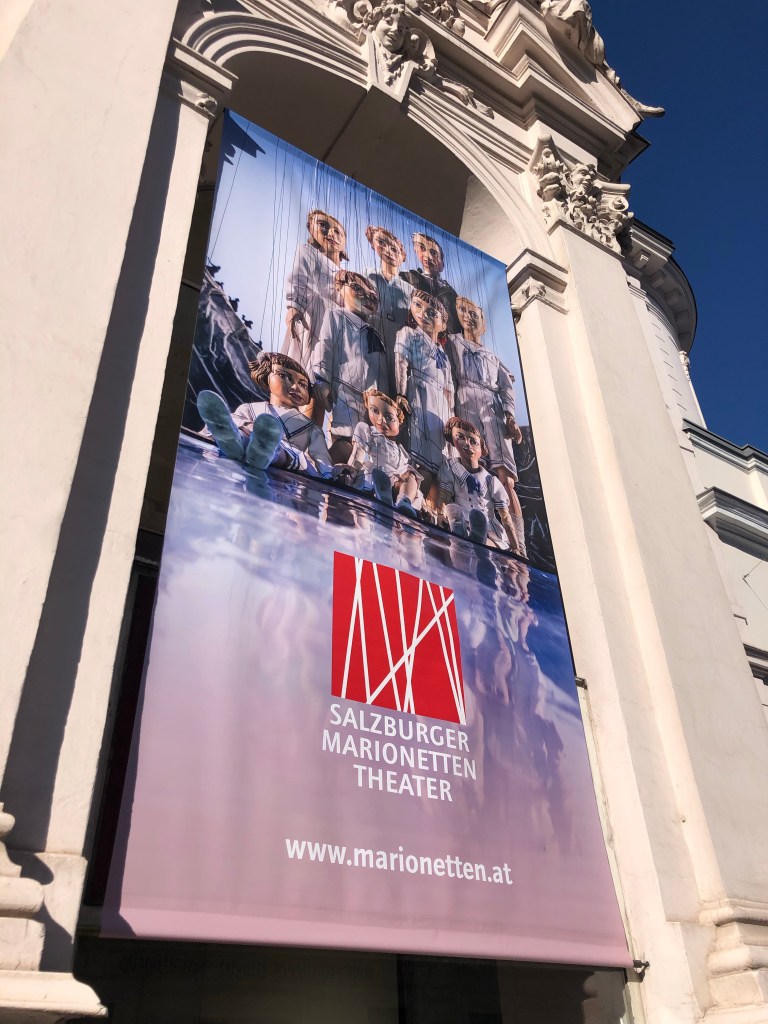
I rushed to do my big activity of the night — a performance at Salzburg’s famous marionette theater. I was hyped up to see that the theater was staging an abridged version of Mozart’s opera, The Magic Flute. Actually, when I was thinking about opera and Wagner before, I found myself humming one of the few famous opera melodies I know — the evil Queen of the Night’s aria from The Magic Flute. Apparently one legend is that Mozart hated the singer who was to play this role, and he was aware that she would bob her head up and down when she sang quick, high notes — so he wrote this aria with the goal of seeing her head jerk around like a chicken’s.
The marionette version was equal parts quirky, funny, impressive and creepy. I honestly had no idea what The Magic Flute was about. Now I can tell you: it’s about a heroic young couple who go through various trials together, an evil queen, and a comedic sort of bird-human hybrid character named Papageno who tags along. (It sounds like a Shrek spinoff when I summarize it like that, honestly) The singing was done in German, while a projection on a nearby wall summarized the scene in various languages. I kept thinking about Pinocchio, though Pinocchio is Italian…
I was able to sleep fairly well despite my 5 noisy roommates, which was awesome. I’ll post soon about my full day in Salzburg.
 Eva Adventures
2 responses to “Day XVIII + XIX: Castle of the Mad King… and a Sound of Music existential crisis”
The hills are alive!!! What a brilliant description of these childhood movies and the areas that inspired! Pinocchio was your brothers favorite movie when he was in Curtis. I think the DVD finally burned through. Keep it coming honey! Love you.
LikeLike
The marionette theater sounds iconic. And the photo from your hike of the countryside is absolutely gorgeous. As far as existential crises go, those will occur on and off until you are in practice awhile. Medicine needs as as many Marias as it does Captain Von Trapps. A flibbertigebbet with critical thinking skills is worth their weight in gold in this profession.
LikeLike