I rolled out of bed at 9 AM this morning — not literally, or I would have maybe died (I’m top bunk) — to go explore Salzburg. Before I get into my day, I’ll first explain a bit about the history of the area.
First, let’s talk big picture about Austria. Austria is a “small alpine republic,” dwarfed by Germany to the northwest. Its population is ~8 million whereas Germany’s is 80 million. I’ll skip some of the long, official history (which I usually get from the Encyclopedia Britannica) and give you the views of some online “commentators.”
Like Germany, Austria was part of various territories as borders changed throughout history. In 1867, it formed a dual monarchy with Hungary — the Austro-Hungarian empire. This empire lasted until 1918, when it was forcibly split up as a result of losing WWI. In 1938, Austria was annexed by Austrian-born Adolf Hitler as part of the “Anschluss,” which was supported by a majority of the Austrian people. Of course, this was reversed at the end of WWII.
Of Austria’s 8 million people, 2 million reside in the capital Vienna (home of the Viennese waltz). The rest of its cities are much smaller, having 100-200,000 people. Salzburg has 150,000 people. (For comparison, the Omaha metropolitan area has a population of ~1 million.)
Germans enjoy touring Austria — they find it scenic, quaint, and folkloric. Germans also consider Austrians to be more leisurely, laid-back people.
One “laid-back” thing I noticed is the large number of tobacco vendors — it seemed like there was a place to buy cigarettes on every block near the train stations. Indeed, anti-smoking laws are very lax here and 43% of people smoke. (In Germany that % is lower but still seems wild to me — I was shocked to find a pile of ashtrays for sale at the Euroshop, Berlin’s equivalent to a dollar store.)
In Austria, German is spoken, but the dialect is more musical and lilting. In this way, Austria is similar to Bavaria. (You might consider it similar to comparing the Midwest’s English dialect to a Southern drawl.) The two regions also share a similar cuisine and some other cultural aspects.
But unlike Germany, the country has not repented for its past; Austria has been criticized for downplaying its role in the Third Reich. Politicians have often called Austria Hitler’s “first victim,” despite the enthusiasm for Hitler and successful popular vote for the Anschluss. In addition, Austrians often slur Germans as “Piefke” (“Prussians”), which may be way to further distance themselves from the nation’s role as willing participant in Hitler’s project.
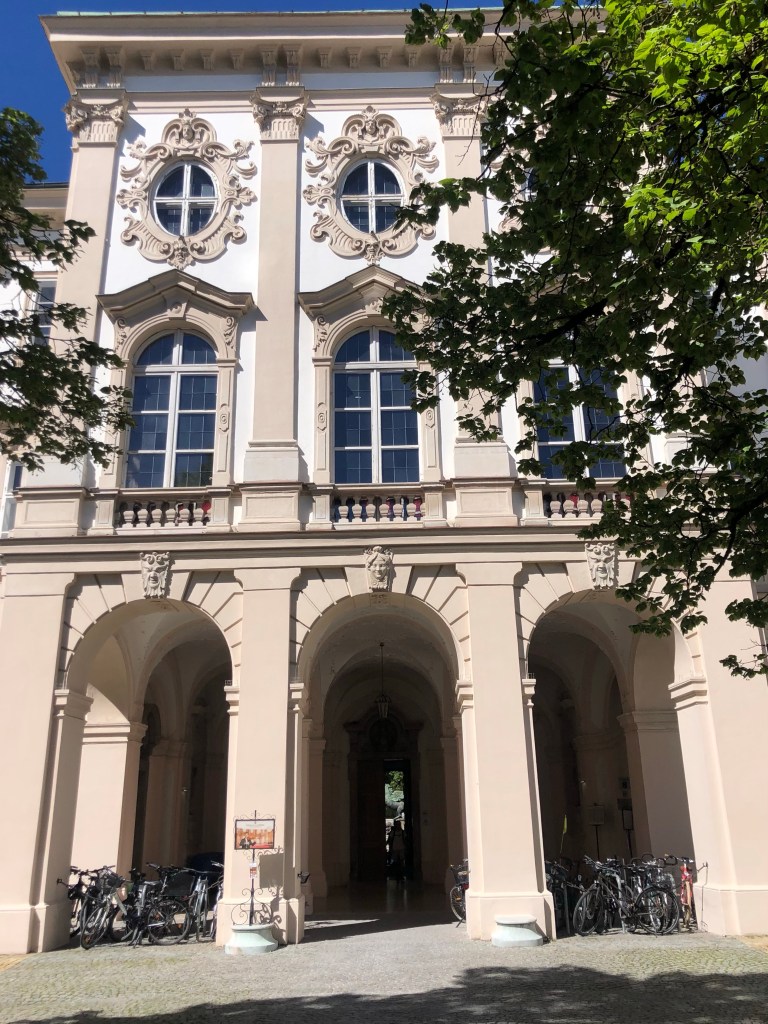
I wasn’t thinking about all that as I walked the streets of Salzburg, though — known as one of Europe’s most beautiful cities. All I could see was the gorgeous Italian-style architecture, and steep mountains flanking all around!
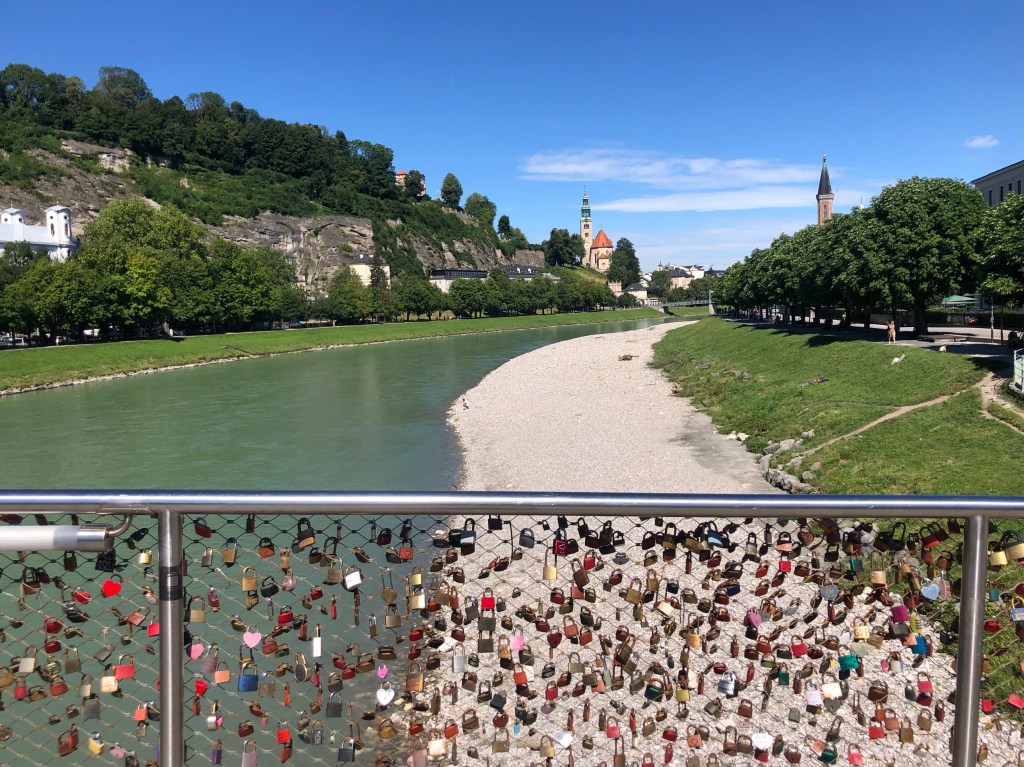
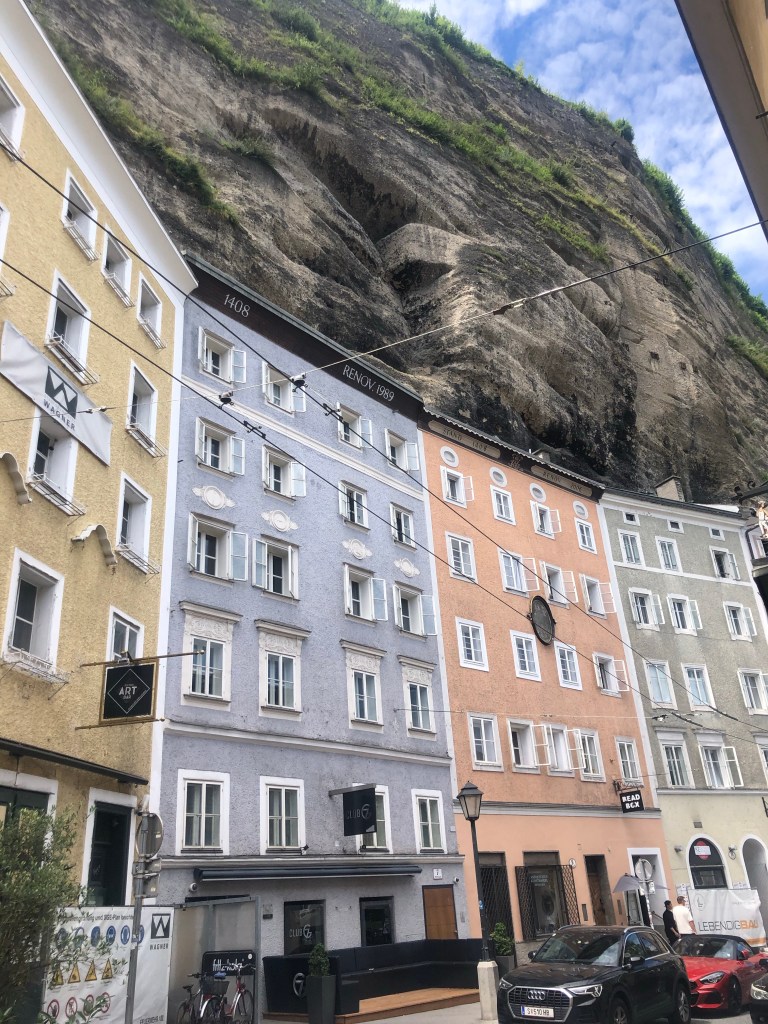
I decided to start my day by walking to the historic district — a Diagon Alley-esque network of shops and cafés. Darting through the adorably small alleys, one can see glass cases where goods are displayed, including gorgeous “haute couture” takes on the Tracht. I spent a lot of time wandering through this area, walking along the river, and ambling through old palace grounds.
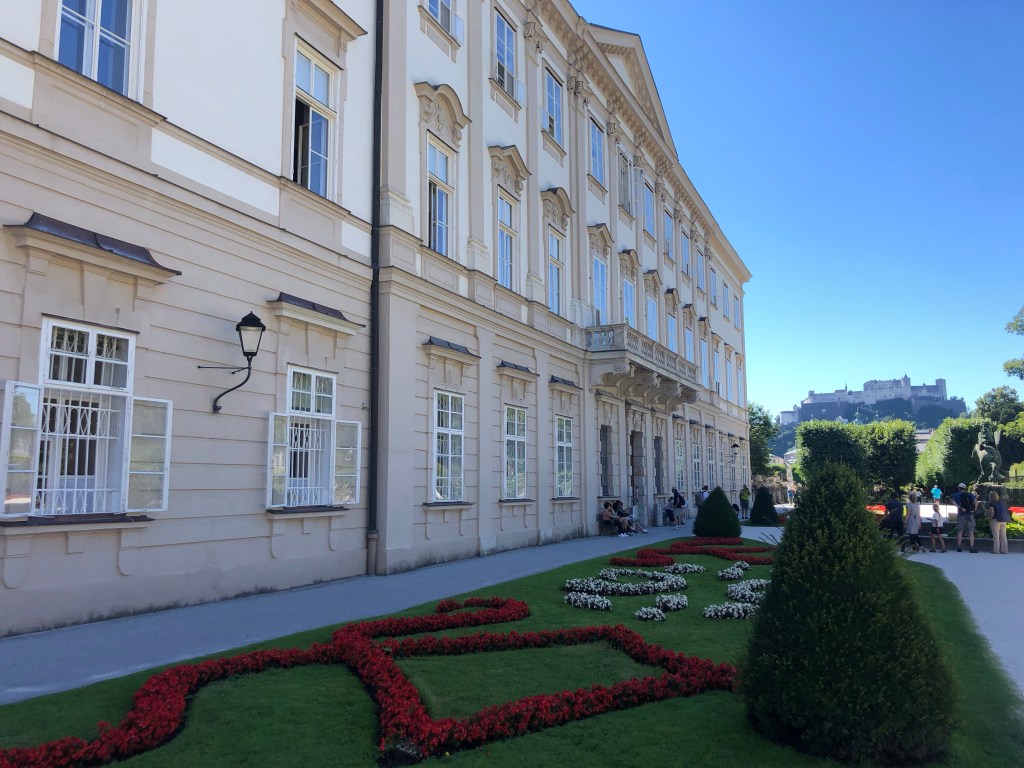
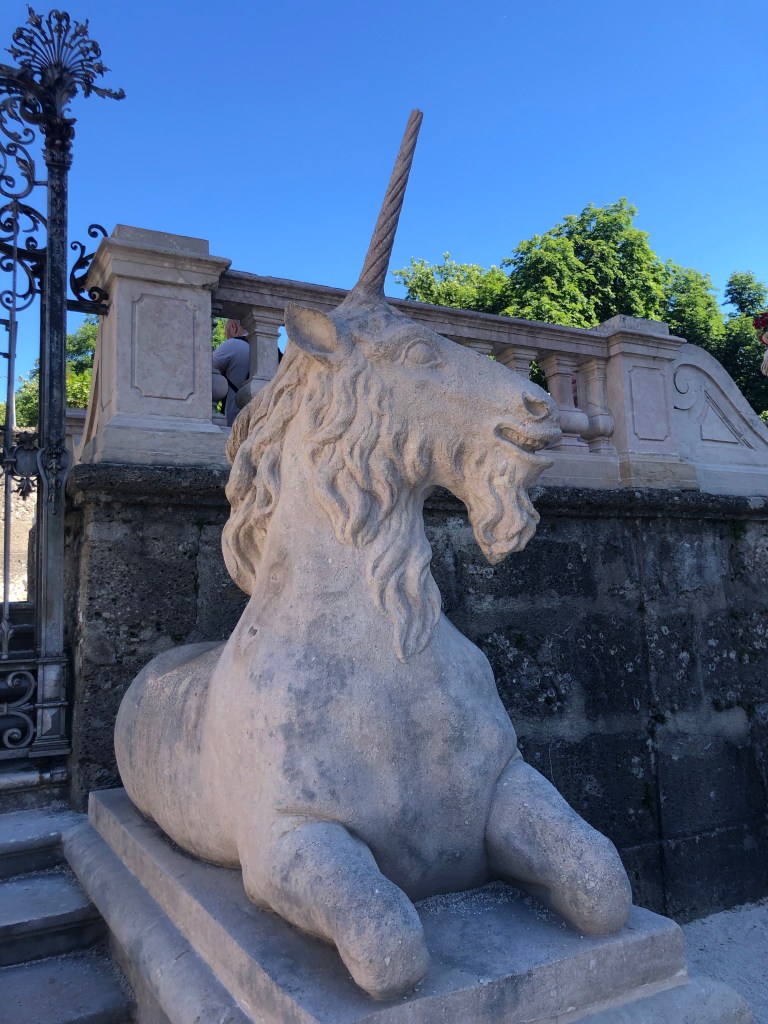
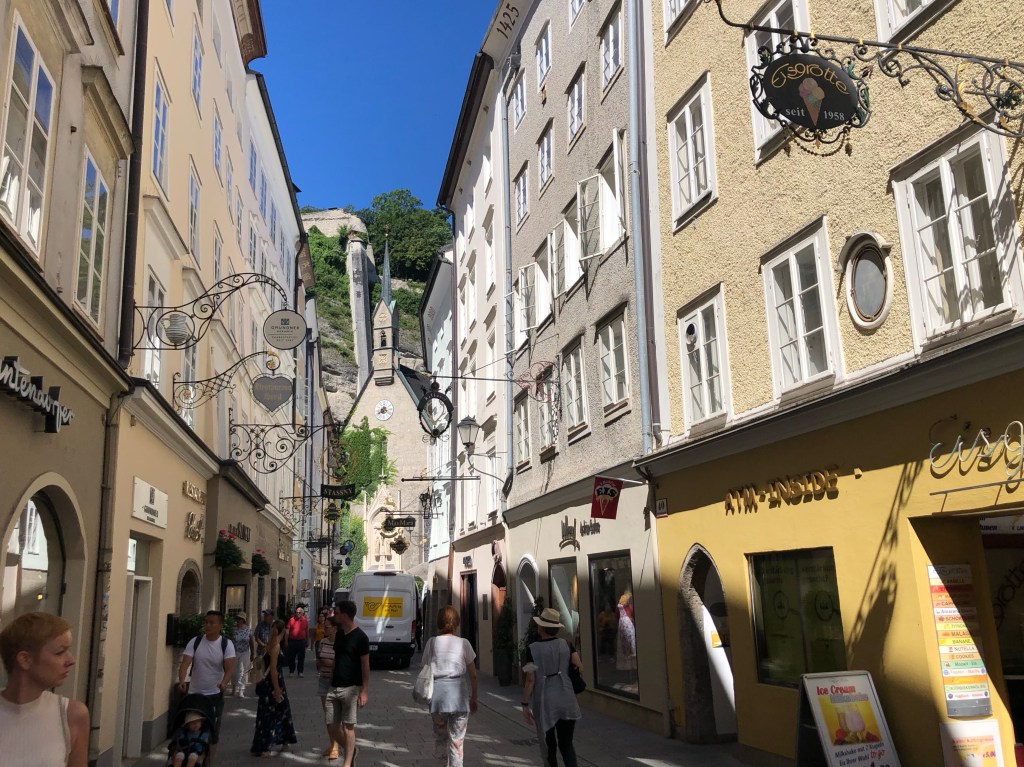
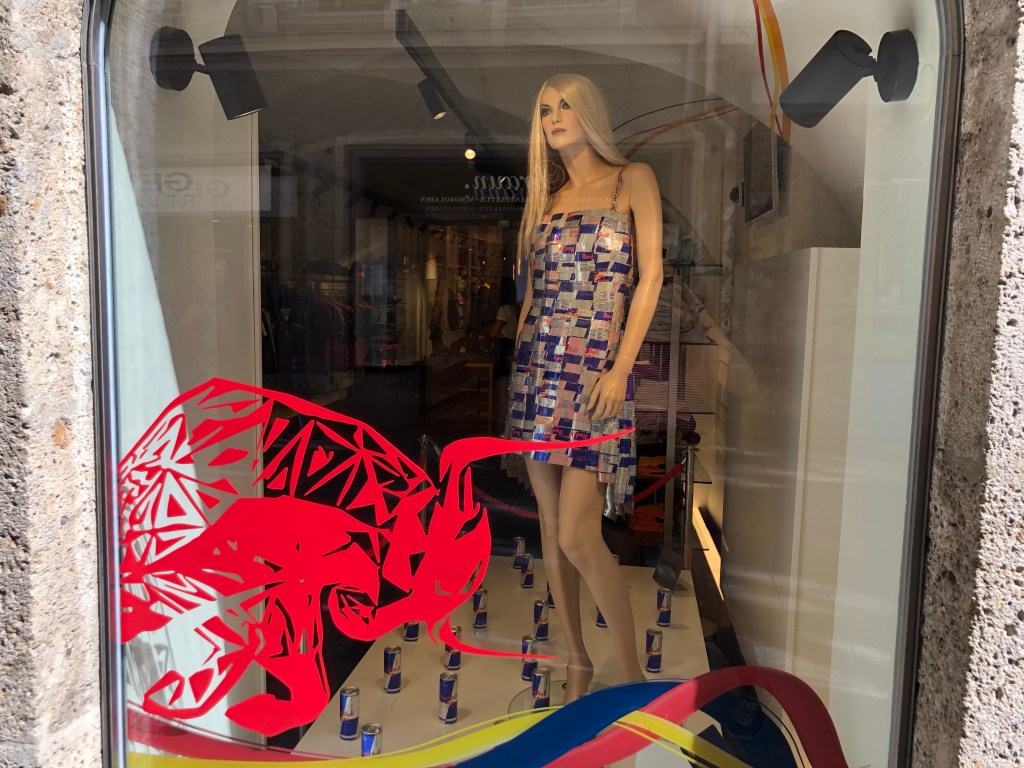

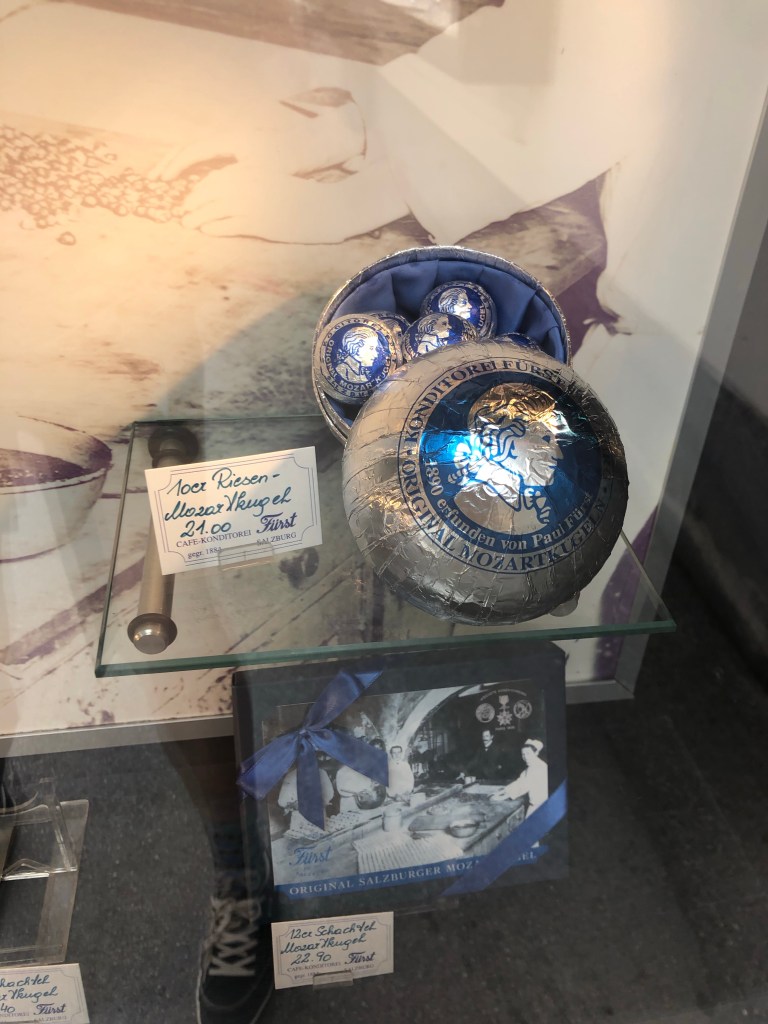
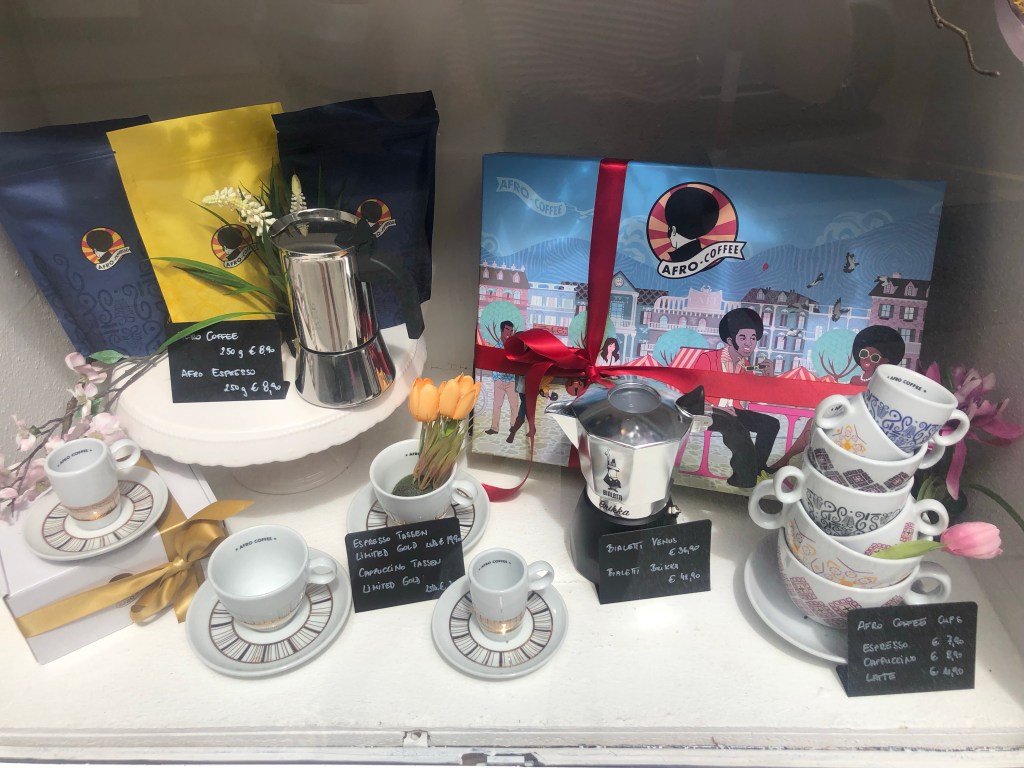

Now Salzburg, is, as I mentioned, a fairly small city of 150,000 people. And it definitely leans into The Sound of Music for tourism’s sake.
There even appears to be a Sound of Music pavilion with a replica of the gazebo where Liesl and Rolf did the “Sixteen Going on Seventeen” number. It was too far away for me to bother visiting, though. And I don’t have a handsome (non-Nazi, this time) guy to pose for pictures with me anyway. Sigh!!!
Just as well. If I tried to do the “run around on the gazebo benches” choreography I may have fallen and broken my ankle.
The other thing I should mention is that Salzburg was Wolfgang Amadeus Mozart’s birthplace, and there are a couple museums and such devoted to him. I figured I already got my healthy dose of Mozart with The Magic Flute last night.
To end the day, I knew I wanted to see what the mysterious castle on the horizon was all about. Turns out it’s called Fortress Hohensalzburg. I began the steep hike up.
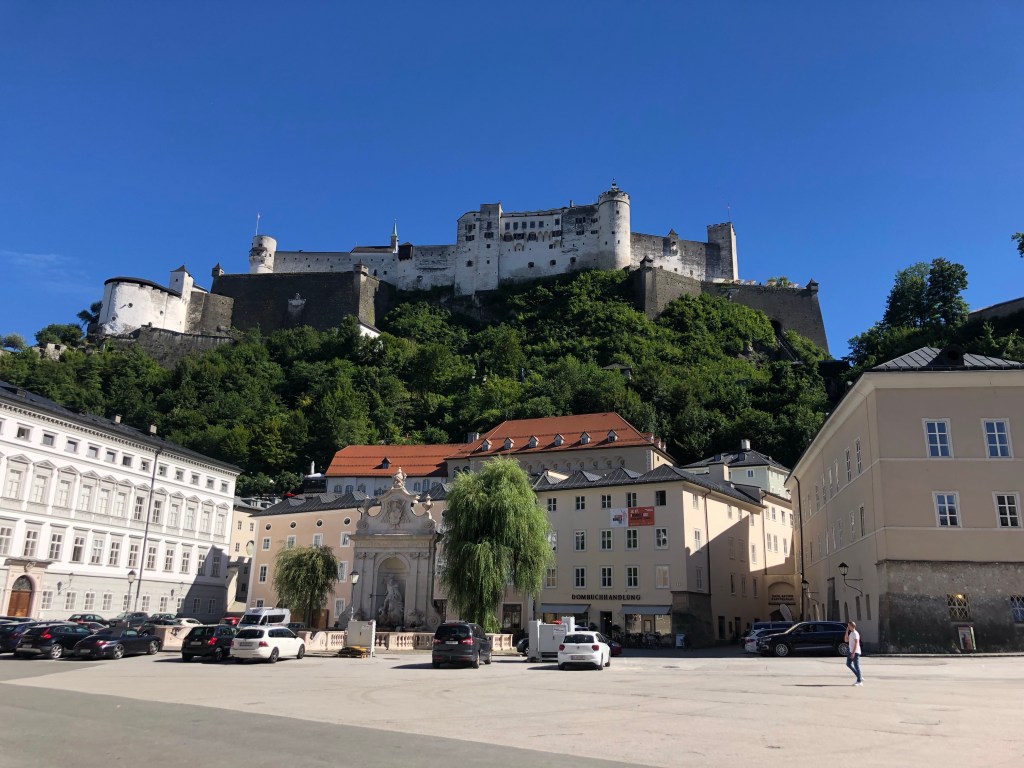
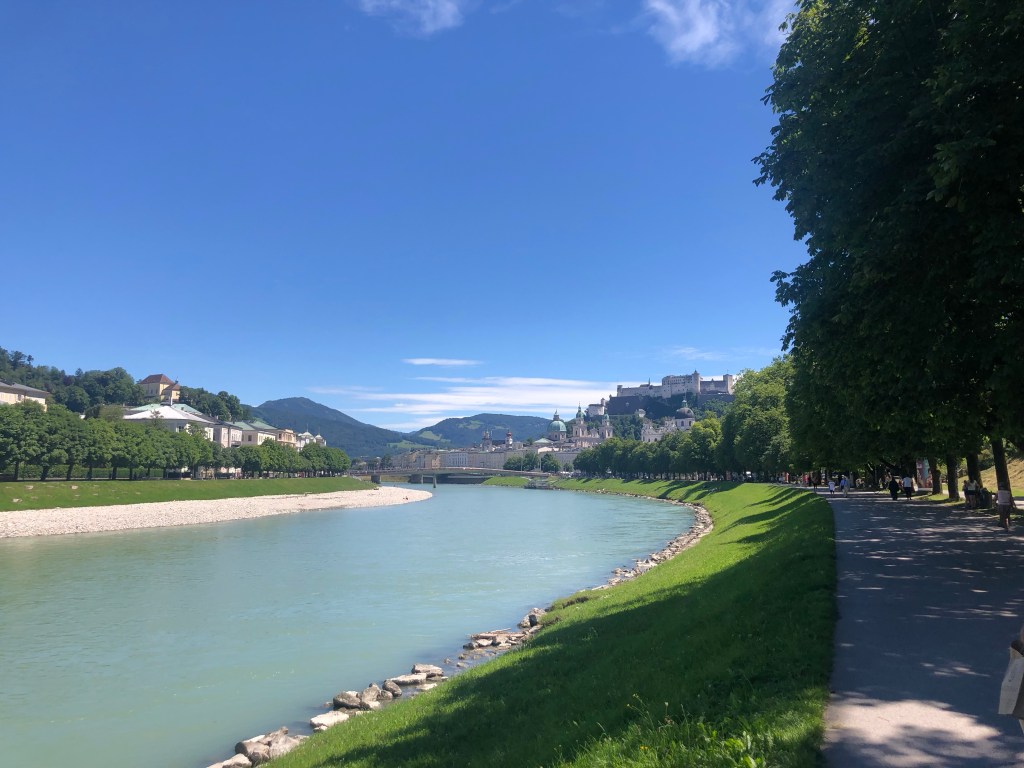
As it turns out, this isn’t a castle ON a hill; this castle IS a hill. Even after reaching it, you get no respite; the interior of the fortress is super steep. The castle — one of the largest in Europe — was able to be built in medieval times because salt and gold deposits made the area very wealthy.
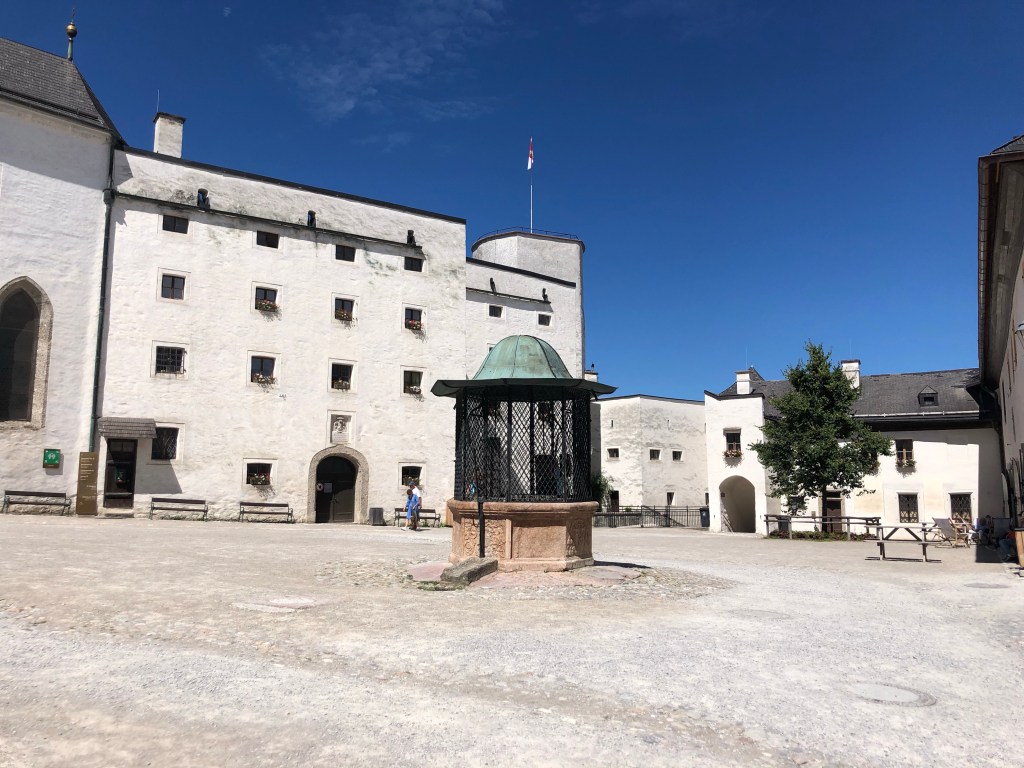
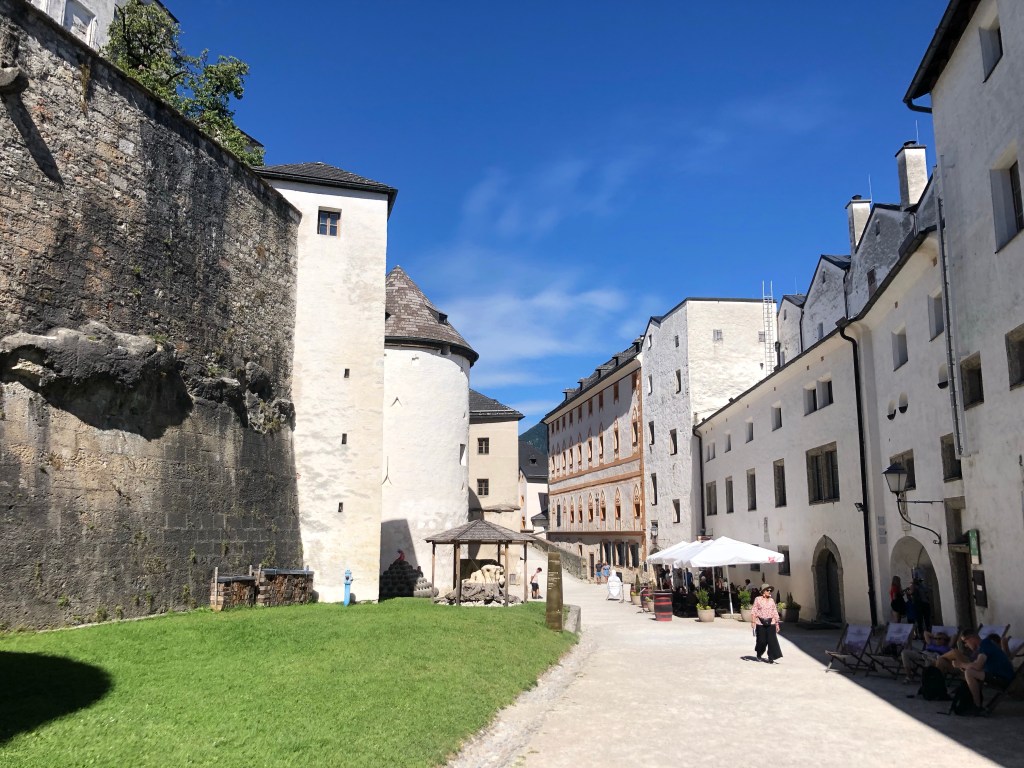
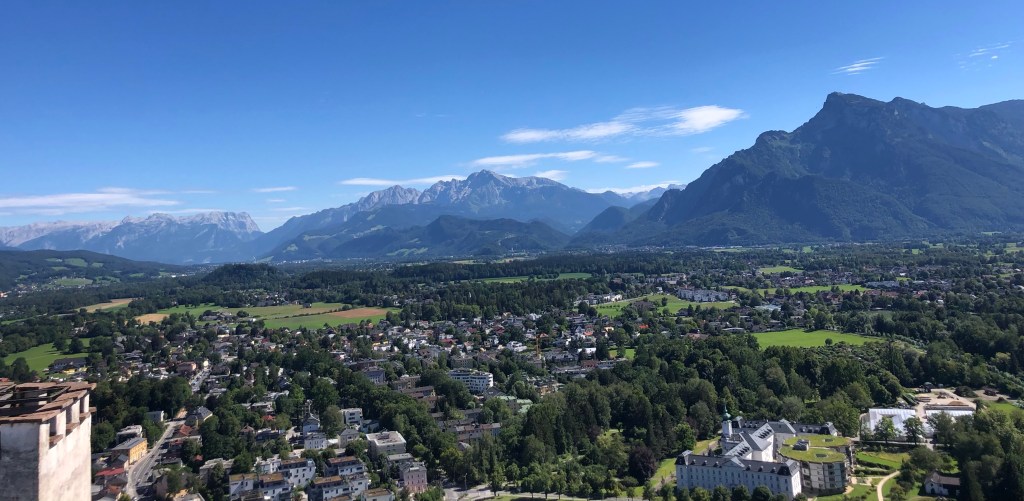
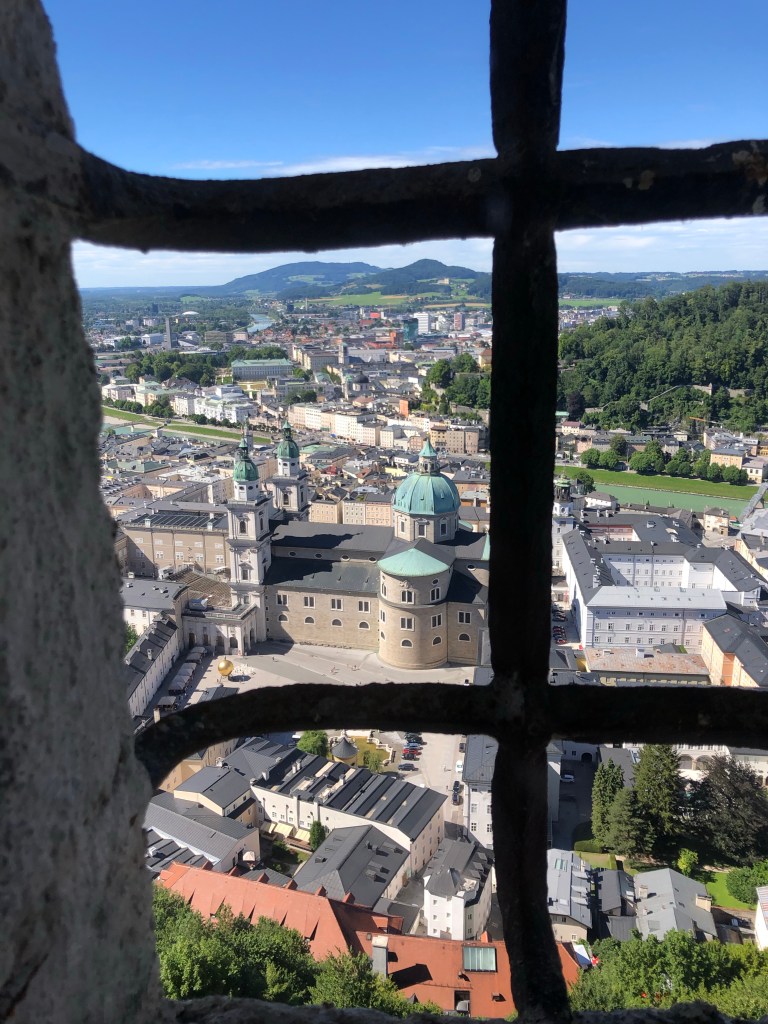
The fortress also had a museum.
The museum did not allow pictures.
The fortress was the home of the Salzburg archbishops.
Archbishops manage a diocese.
A diocese is an area of land.
All of the museum inscriptions were written exactly like this.
Single sentences.
One clause per sentence.
I do not know why they made this choice.
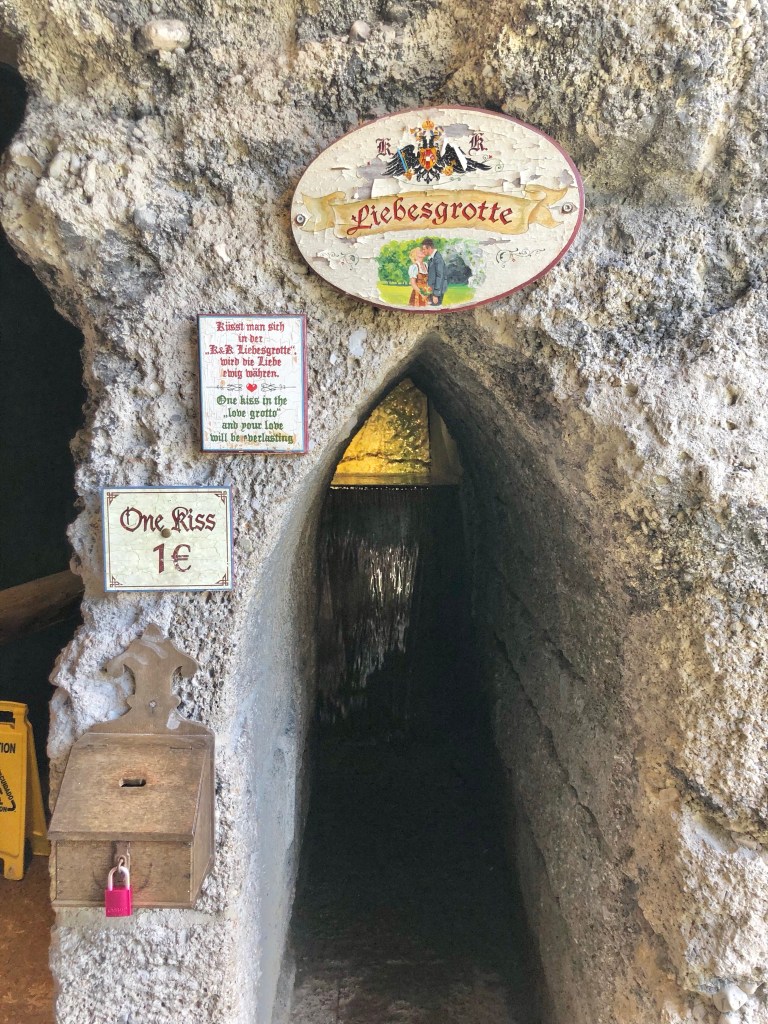
After a modest dinner of store-bought falafel salad, I retired to the 6-bed hostel room. I chatted with a German tourist and two Americans. The German told me that Austria is unfortunately dealing with a very right-wing government at the moment. Also, at least two people are here because they missed their trains elsewhere and are now trapped. So please send thoughts and prayers that I don’t somehow mess up my trip to Budapest tomorrow. Talk to you then!
 Eva Adventures
8 responses to “Day XX: The secrets of Salzburg”
Wow. The photos are amazing and you definitely have an excellent way with words. You bring the history and modern day life of these towns to life. Existential crisis will happen from time to time. Especially traveling in a foreign country. I have loved Julie Andrews my entire life.
LikeLiked by 1 person
Julie Andrews is such a treasure. I need to watch her other movies again!
LikeLike
Your writing with singles sentences with one clause per sentence made me laugh out loud. At first, I thought you were cracking up! Fingers crossed for Budapest.
LikeLiked by 1 person
You thought I’d finally lost it 😜
LikeLike
Typical Dad observation, but der Waffolino prior to the recent Euro devaluation would cost twelve bucks American! There definitely is a different socioeconomic approach to living there–ie ‘way of life’ prioritized over ‘maximizing profit.’
I’m really enjoying your adventures and anecdotes.
LikeLike
What happened to the value of the Euro — did it crash from being worth $2 to $1? 😳 I agree, a relaxed lifestyle seems important here! I think that ties into how all the businesses close at 8, too. No one wants to work at a 24 hour business or an overnight shift.
LikeLike
I almost spit my coffee out with the first line of your blog in regards to you rolling out of bed!
LikeLike
I’m glad it made you laugh!! 😆
LikeLike